News Center

Going Global, Welcoming the World - Liaocheng High-tech Zone Successfully Holds a Business Promotion Conference on High-Quality Development of Open Economy in the Yellow River Basin and the Yangtze River Delta at the China International Import Expo


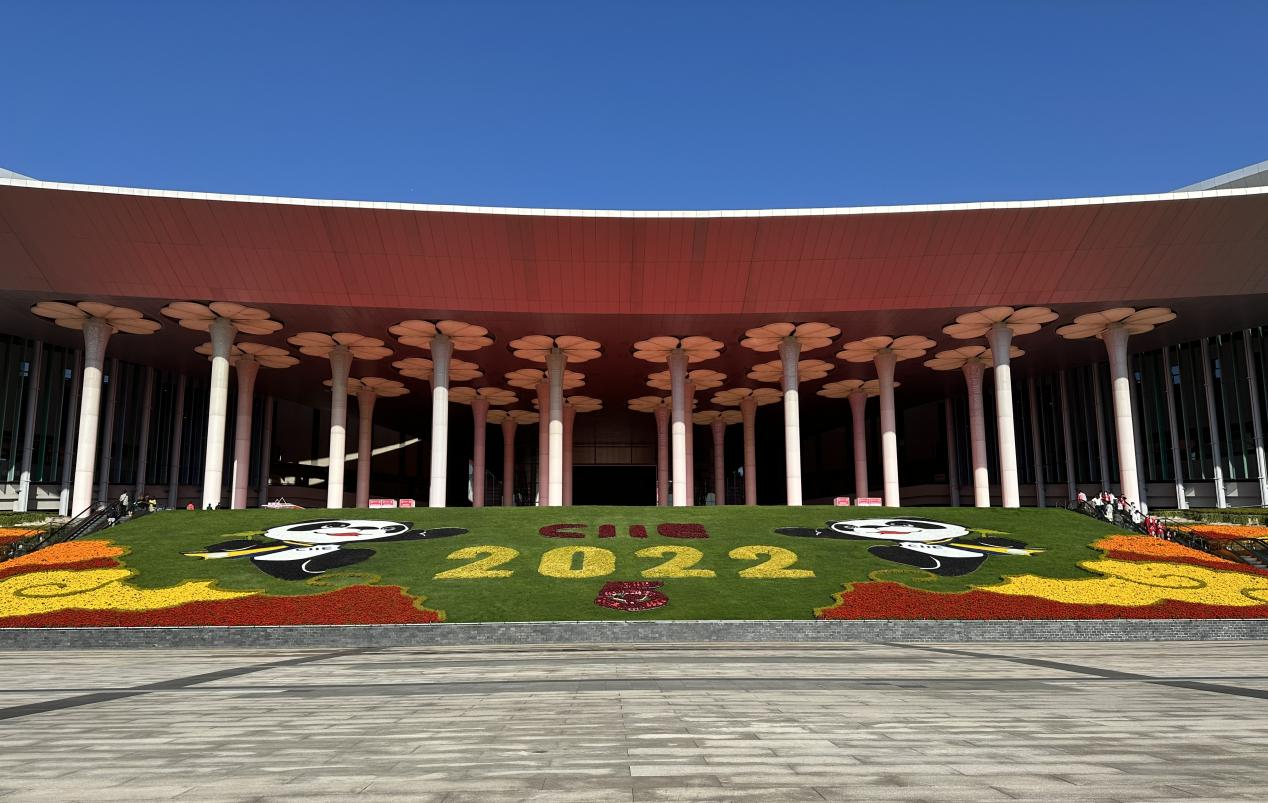
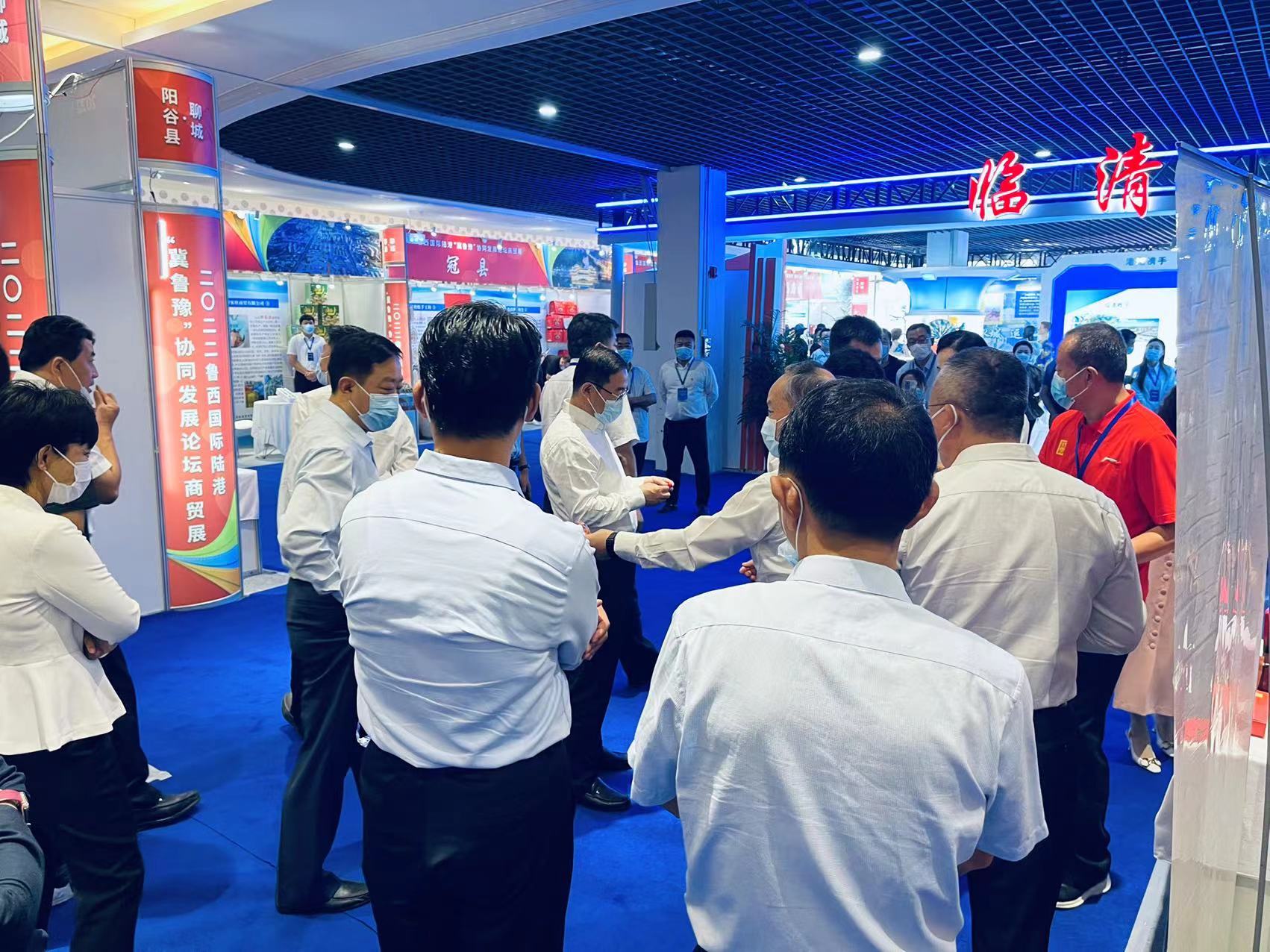
On November 7, 2023, Liaocheng High-tech Industrial Development Zone successfully held a "Yellow River Basin-Yangtze River Delta" Open Economic High-quality Development Investment Promotion Conference at the 5th China International Import Expo. The conference was hosted by the Management Committee of Liaocheng High-tech Industrial Development Zone and undertaken by the Investment Promotion Department of Liaocheng High-tech Industrial Development Zone. Shandong Zhenghe International Exhibition Co., Ltd. served as the organizer for three consecutive years, providing high-quality services and guarantees for the promotion and investment activities held by Liaocheng High-tech Industrial Development Zone during the Import Expo. The conference received strong support from the Romanian Chamber of Commerce and Industry, the Serbian Chamber of Commerce, the Netherlands China Chamber of Commerce, the Embassy of Sri Lanka in China, the Embassy of the Republic of Zimbabwe in China, and the India Foreign Investors Promotion Council. At the conference, Liaocheng High-tech Zone leveraged the 5th Import Expo to connect with more than ten projects spanning multiple industries and countries. This demonstrates Liaocheng High-tech Zone's commitment to all-round opening up, building an open economy, supporting a multilateral trading system, improving the regional trade and investment environment, promoting trade and investment liberalization and facilitation, helping countries better cope with challenges, enhancing the region's future development potential, and benefiting the people of all countries in the region. Five projects were signed on-site. The successful signing and gradual implementation of these projects will provide continuous impetus for the rapid development of Liaocheng High-tech Zone's open development.

Several airlines have announced the resumption and increase of several international routes, with destinations in Asia, Europe, and America.


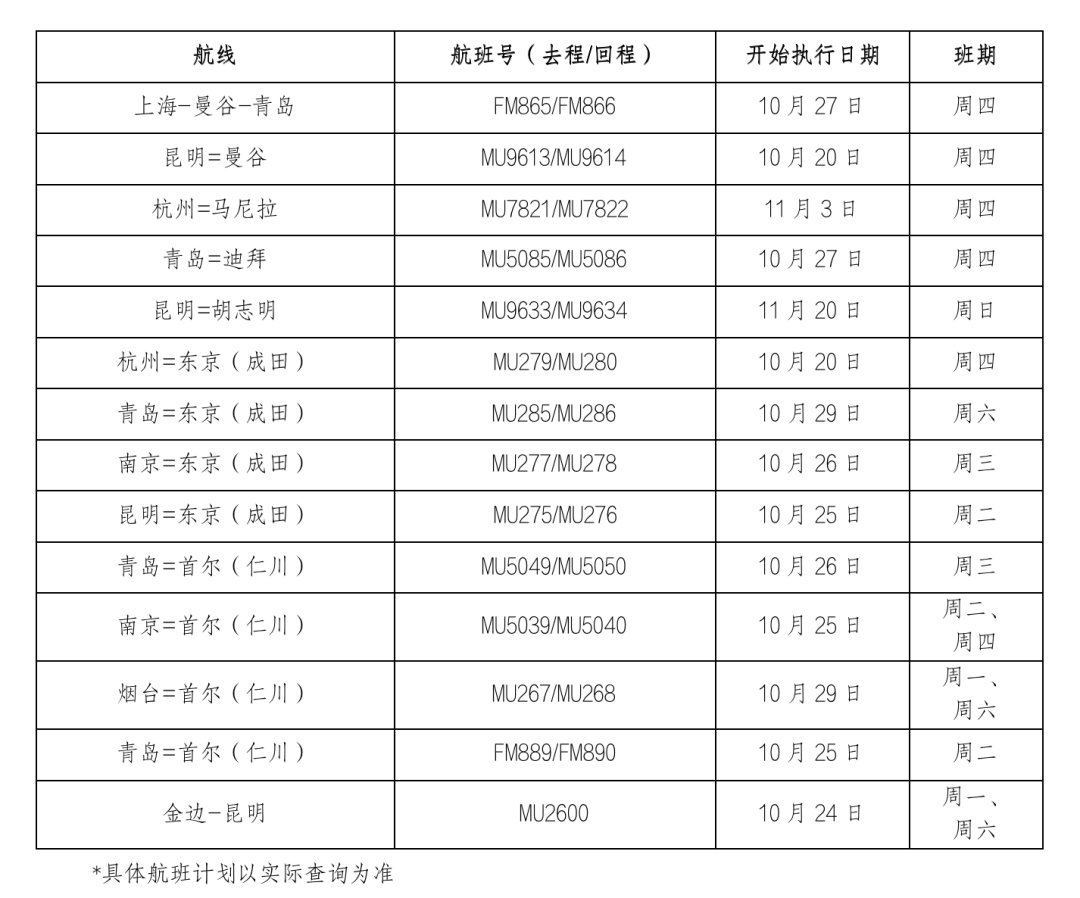
Since October, many airlines have announced the resumption and increase of flights on multiple international routes. Recently, reporters from the Paper, including China Eastern Airlines, Southern Airlines, and Hainan Airlines, learned that in order to implement the State Council's requirements on the orderly increase in the number of international passenger flights, airlines have quickly formulated flight resumption plans and resumed and increased flights on multiple international routes. It is understood that from October 30, civil aviation will usher in the adjustment of the winter and spring flight schedules. After the start of the winter and spring season, China Eastern Airlines plans to increase its weekly international passenger routes to 42 routes and 108 flights; according to the current plan, Southern Airlines' international flights will increase from the original 71 flights per week to 86 flights per week (round-trip counted as 2 flights). Hainan Airlines plans to increase the frequency of the Chongqing-Rome international flight to twice a week on November 6. Resumption and increase of routes involve Asia, Europe and America On October 17, reporters from the Paper learned from China Eastern Airlines that China Eastern Airlines plans to resume multiple international routes at the end of October, including Shanghai-Bangkok-Qingdao, Hangzhou/Qingdao/Nanjing/Kunming-Tokyo Narita, Qingdao/Nanjing/Yantai-Seoul Incheon, and Qingdao-Dubai routes. After the official start of the winter and spring season on October 30, 2022, China Eastern Airlines plans to increase its weekly international passenger routes to 42 routes and 108 flights. The newly added international routes will be gradually implemented from October 20. Among them, the Kunming-Bangkok and Hangzhou-Tokyo Narita routes will resume on the 20th, with one flight per week; the Phnom Penh-Kunming route will increase to two flights per week starting on the 24th; the Kunming-Tokyo Narita, Nanjing-Seoul Incheon, and Qingdao-Seoul Incheon routes will resume on the 25th; the Nanjing-Tokyo Narita and Qingdao-Seoul Incheon routes will increase to one flight per week on the 26th; the Shanghai-Bangkok-Qingdao and Qingdao-Dubai routes will increase to one flight per week on the 27th; and the Qingdao-Tokyo Narita and Yantai-Seoul Incheon routes will be implemented on the 29th. In November, China Eastern Airlines will also gradually resume and increase the frequency of international routes such as Hangzhou-Manila and Kunming-Ho Chi Minh City. China Eastern Airlines plans to resume multiple international routes It is understood that since July this year, China Eastern Airlines has gradually resumed multiple international routes, including Hangzhou-Manila, Hangzhou-Kuala Lumpur, Qingdao-Osaka, Qingdao-Seoul Incheon, and Kunming-Colombo. As of mid-October, China Eastern Airlines can operate 25 routes and 54 flights per week. On October 17, reporters from the Paper learned from Southern Airlines that Southern Airlines plans to resume the Guangzhou-Jakarta and Dalian-Tokyo Narita routes in October, and at the same time increase flights on routes such as Guangzhou-Dubai, Guangzhou-Manila, Guangzhou-Bangkok, and Guangzhou-Phnom Penh. Among them, the Guangzhou-Jakarta route will resume on October 26, with two round trips per week; the Dalian-Tokyo Narita route will resume on October 25, with two round trips per week; the Guangzhou-Dubai route will increase to three round trips per week on October 27; the Guangzhou-Manila route will increase to one round trip per week on October 27; the Guangzhou-Bangkok route will increase to one round trip per week on October 24; and the Guangzhou-Phnom Penh route will increase to one round trip per week on October 18. Currently, Southern Airlines' international flights will increase from the original 71 flights per week to 86 flights per week (round-trip counted as 2 flights). According to a WeChat public account message from Air China on September 29, Air China will resume multiple international routes. Among them, the Manila, Jakarta, and Tokyo routes are applicable for travel dates from September 19, 2022 to October 29, 2022; the Warsaw, Athens, Vancouver, Los Angeles, and Toronto routes are applicable for travel dates from September 19, 2022 to December 31, 2022. Air China said it will resume multiple international routes Hainan Airlines also recently disclosed the resumption of multiple international routes. Hainan Airlines stated that after the start of the winter and spring season on October 30, it will continue to operate 10 round-trip international passenger routes, including Beijing-Brussels, Beijing-Moscow, Beijing-Belgrade, Beijing-Berlin, Beijing-Manchester, Chongqing-Rome, Chongqing-Madrid, Shenzhen-Vancouver, Dalian-Tokyo, and Dalian-Seoul. At the same time, the Chongqing-Rome international flight will be increased to twice a week. Among them, Hainan Airlines plans to increase the frequency of the Chongqing-Rome direct flight to two round trips per week starting on November 6, adding a Sunday flight to the existing Thursday flight. Both round trips will carry passengers and cargo, and the increased capacity will be restored to the pre-epidemic level. According to the official WeChat public account message on October 13, Spring Airlines will open multiple Hong Kong, Macau, and international routes starting on October 14. International routes include eight round-trip routes: Shenyang-Osaka, Hangzhou-Tokyo (Narita), Hangzhou-Seoul, Shanghai-Bangkok, Nanning-Phnom Penh, Guangzhou-Phnom Penh, Nanning-Bangkok, and Shenyang-Seoul. Spring Airlines opens multiple new Hong Kong, Macau, and international routes Juneyao Airlines also plans to open and resume some international routes in October. According to a recent message on Juneyao Airlines' official Weibo, the Nanjing-Seoul route will be operated starting October 8, with one flight per week on Saturdays. The Nanjing-Osaka round-trip route will resume on October 16, with one flight per week on Sundays. Civil Aviation Administration of China: Gradually increase the number of international flights At the end of May this year, after the State Council executive meeting mentioned "orderly increasing domestic and international passenger flights and formulating measures to facilitate the travel of foreign enterprise personnel," multiple domestic airlines announced the resumption of international passenger routes in June. At a press conference of the Civil Aviation Administration of China in July this year, Xu Qing, deputy director of the Transportation Department of the Civil Aviation Administration of China, said that considering the needs of overseas students returning to China and other international personnel exchanges, the Civil Aviation Administration of China is, under the unified coordination of the State Council's joint prevention and control mechanism, steadily and orderly resuming international scheduled passenger flights based on the development of the epidemic situation, the optimization of recent prevention and control measures, and the improvement of local capacity to support international flights. The Civil Aviation Administration of China will continue to strengthen consultations with relevant countries and gradually increase the number of international flights. From The Paper

Latest | Notice from the Ministry of Commerce on Issuing Several Policy Measures Supporting Stable Foreign Trade Development


People's Governments of all provinces, autonomous regions, municipalities directly under the Central Government, and cities separately planned, Xinjiang Production and Construction Corps, Ministry of Foreign Affairs, National Development and Reform Commission, Ministry of Industry and Information Technology, Ministry of Public Security, Ministry of Finance, Ministry of Human Resources and Social Security, Ministry of Transport, National Health Commission, State-owned Assets Supervision and Administration Commission, General Administration of Customs, State Taxation Administration, State Administration for Market Regulation, China Banking and Insurance Regulatory Commission, National Immigration Administration, Railway Bureau, Civil Aviation Administration of China, China Council for the Promotion of International Trade, China State Railway Group Co., Ltd., and China Export & Credit Insurance Corporation: Openness is a fundamental state policy of China. Imports and exports strongly support steady growth and employment. Efforts must be made to stabilize foreign trade. With the approval of the State Council, the "Several Policy Measures to Support the Stable Development of Foreign Trade" is hereby issued to you. Please earnestly organize and implement it. Major foreign trade provinces should better play a leading role and come up with specific measures. Relevant departments should strengthen coordination and services. Ministry of Commerce September 27, 2022 Several Policy Measures to Support the Stable Development of Foreign Trade I. Ensuring Production and Fulfillment of Contracts, Supporting Advantageous Products in Exploring International Markets. All localities should strengthen the guarantee of various aspects for foreign trade enterprises, including epidemic prevention, energy use, employment, and logistics. When necessary, they should provide full support to ensure the timely fulfillment and delivery of foreign trade orders. (People's governments of all localities, Ministry of Commerce, National Development and Reform Commission, Ministry of Industry and Information Technology, Ministry of Transport, Ministry of Human Resources and Social Security, National Health Commission, and General Administration of Customs shall be responsible according to their respective duties.) Combining the practices of relevant countries and the actual market demand of China, study and optimize the underwriting conditions of medium- and long-term insurance, and increase the support of export credit insurance. (Ministry of Commerce, Ministry of Finance, China Banking and Insurance Regulatory Commission, and China Export & Credit Insurance Corporation shall be responsible according to their respective duties.) Make unified use of existing funding channels such as special funds for foreign economic and trade development to further support small and micro foreign trade enterprises in exploring international markets. Ensure that special funds for foreign economic and trade development are used in place as soon as possible. (People's governments of all localities, Ministry of Finance, and Ministry of Commerce shall be responsible according to their respective duties.) II. Actively Supporting Enterprises in Participating in Various Exhibitions to Secure Orders. All localities should actively utilize special funds for foreign economic and trade development and other relevant funds to support enterprises in participating in various overseas self-organized exhibitions held by the localities, other regions, or trade promotion institutions and exhibition enterprises. Encourage localities with conditions to expand the scale of overseas self-organized exhibitions. All localities should strengthen guidance and support enterprises in improving the service level and work enthusiasm of overseas representatives, and continuously improve the effectiveness of representative participation. For foreign trade personnel's business activities such as exhibitions and business negotiations going abroad under the normalized epidemic prevention and control, the foreign affairs and commerce authorities and immigration management agencies of all localities should further strengthen service guarantees. (People's governments of all localities, Ministry of Commerce, Ministry of Foreign Affairs, Ministry of Finance, National Immigration Administration, and China Council for the Promotion of International Trade shall be responsible according to their respective duties.) III. Successfully Holding the 132nd China Import and Export Fair (Canton Fair) Online Exhibition. Expand the scope of participating enterprises. In addition to the 25,000 participating enterprises in the physical exhibition, support all enterprises that meet the participation qualification standards to voluntarily apply for participation. Extend the online exhibition time from 10 days to 5 months. Strengthen investment promotion and lead generation, comprehensively use various channels for publicity and recommendation, and further increase the number of registered purchasers and visitors. Optimize platform functions, facilitate supply-demand docking, and improve transaction effectiveness. (Ministry of Commerce is responsible.) IV. Giving Full Play to the Role of Foreign Trade Innovation Platforms. Quickly establish a new batch of pilot programs for market procurement trade methods, demonstration zones for promoting innovation in import trade, and comprehensive pilot zones for cross-border e-commerce. (Ministry of Commerce takes the lead, and all relevant departments are responsible according to their respective duties.) Add a new batch of regions that can conduct used car export business. (Ministry of Commerce, Ministry of Public Security, and General Administration of Customs shall be responsible according to their respective duties.) For provinces (regions, municipalities) with outstanding performance in stabilizing foreign trade in 2022 and making significant contributions to the national foreign trade growth, appropriate consideration should be given in the subsequent establishment of pilot programs for foreign trade innovation platforms and the arrangement of the number of newly added booths at the China Import and Export Fair (Canton Fair). (Ministry of Commerce takes the lead.) V. Further Giving Full Play to the Role of Cross-border E-commerce in Stabilizing Foreign Trade. Issue further policy measures to support the development of overseas warehouses for cross-border e-commerce. Study the launch of the second phase of the Guiding Fund for the Innovative Development of Service Trade this year, further mobilize social capital, and make unified use of existing funding channels such as special funds for foreign economic and trade development to jointly support the development of new foreign trade formats such as cross-border e-commerce and overseas warehouses. Under the premise of compliance with laws and regulations and controllable risks, further strengthen the support of export credit insurance for the construction and operation of overseas warehouses. Optimize customs registration procedures, strengthen the organization of China-Europe freight trains, and support the transportation of goods exported from overseas warehouses. (Ministry of Commerce takes the lead, and the National Development and Reform Commission, Ministry of Finance, General Administration of Customs, China Banking and Insurance Regulatory Commission, China State Railway Group Co., Ltd., and China Export & Credit Insurance Corporation shall be responsible according to their respective duties.) Accelerate the issuance of tax policies to facilitate the return and exchange of goods for cross-border e-commerce exports. (Ministry of Finance takes the lead, and the Ministry of Commerce, General Administration of Customs, and State Taxation Administration shall be responsible according to their respective duties.) VI. Further Promoting Trade Smoothness. Improve port collection and distribution and domestic transportation efficiency to ensure the rapid transfer and transportation of import and export goods. Ensure the stability of industrial chains and supply chains. Continue to clear unreasonable charges at ports, and strengthen supervision of charging entities at port areas and off-port yards and other maritime ports. (People's governments of all localities, National Development and Reform Commission, Ministry of Transport, Ministry of Commerce, State-owned Assets Supervision and Administration Commission, General Administration of Customs, State Administration for Market Regulation, Railway Bureau, and Civil Aviation Administration of China shall be responsible according to their respective duties.) Issue a reference for standard operating procedures for import cargo at ports, promote good experience and practices in improving port quality and efficiency, promote mutual learning and reference among various ports and localities, and urge cargo owners and their agents to quickly pick up goods to reduce customs clearance costs. All ports should ensure smooth export channels. (People's governments of all localities, Ministry of Commerce, Ministry of Transport, General Administration of Customs, Railway Bureau, Civil Aviation Administration of China, and China State Railway Group Co., Ltd. shall be responsible according to their respective duties.) Strengthen customs clearance facilitation services for foreign trade enterprises, further improve cargo customs clearance efficiency, and achieve rapid import and export of goods upon arrival. (Ministry of Commerce and General Administration of Customs shall be responsible according to their respective duties.) Under the premise of ensuring epidemic prevention and control safety, make every effort to improve the capacity and efficiency of land transportation between Shenzhen and Hong Kong, and maximize the satisfaction of enterprises' land transportation needs. (People's Government of Guangdong Province and Shenzhen Municipal People's Government take the lead, and the Ministry of Transport, Ministry of Commerce, and General Administration of Customs shall be responsible according to their respective duties.) Source: Ministry of Commerce Website

India restricts food exports, what is the impact on China's market?


India recently announced a ban on broken rice exports and a 20% tariff on exports of some rice, including unmilled rice, husked rice, semi-milled rice, and fully milled rice, effective September 9. This move, coming at a time when the Black Sea Grain Corridor has resumed and the global food crisis has eased somewhat, has once again stirred the global grain market and could trigger a new round of global food price increases, further exacerbating the global food crisis. Extreme drought may lead to rice reduction in India's tax increase India's rice exports play a pivotal role in the global rice market supply. India is the world's second-largest rice producer and the world's largest rice exporter, supplying rice to over 150 countries. Its rice exports account for 40% of global rice trade, exceeding the combined rice exports of Thailand, Vietnam, Pakistan, and the United States. In 2021, India's rice exports reached a record 21.5 million tons. This year, affected by extreme drought, India's rice planting area has dropped significantly, and expectations of rice reduction are strong. Officials from India's food department said that the country's food reduction is mainly due to drought in four states, with a drought-affected area of 2.5 million hectares, resulting in a reduction of about 7 to 8 million tons of food. It is expected that by this winter, the rice planting area may further decrease by 3.8 million hectares, and rice may decrease by 10 to 12 million tons. Domestic rice prices in India have risen sharply, exacerbating inflation. According to the Indian Central Statistical Office, India's CPI in August rose from 6.71% in July to 7%, ending a three-month decline. Among them, the price of grains and their products increased by 9.57%. Therefore, the Indian government announced on August 8 that it would impose a 20% tariff on some exported rice. Rice prices may rise, further exacerbating the global food supply and demand imbalance India's restrictions on rice exports will help ensure domestic supply and stabilize rice prices, but will further exacerbate the global food supply and demand imbalance, push up rice prices, increase import costs for rice-importing countries, and put additional inflationary pressure on some countries that heavily rely on rice imports from India. In terms of supply and demand, the global rice supply and demand situation has remained loose in recent years. This year, affected by extreme high temperatures, drought, and floods, rice production faces severe challenges. In addition to India, the main rice-producing areas in southern China have been affected by continuous high temperatures and drought. Although early rice has achieved a slight increase in production, mid-late rice faces the risk of reduced production. In the United States, the rice planting area in California has dropped significantly due to extreme drought, and the harvest is expected to be halved, leading to a decrease in rice exports. Pakistan's rice production has been severely hit by extreme floods. Some institutions predict that global rice production will decrease slightly this year. Faced with the challenge of rising rice prices, countries around the world should work together. Rice-exporting countries should abandon food trade protectionism, developed countries should help developing countries improve their food self-sufficiency, and joint efforts should be made to build an efficient, open, and fair global food supply system. The impact of the broken rice export ban on China is controllable China is the largest buyer of broken rice from India, and India's rice export ban has a controllable impact on China's rice market. China has had a surplus of rice production over demand for many years, with sufficient reserves and a self-sufficiency rate exceeding 100%, fully meeting market needs. Imported rice is mainly used to adjust demand. In 2021, China's rice imports reached 4.96 million tons, accounting for only about 3% of that year's output. Moreover, China's rice imports mainly come from India, Vietnam, Pakistan, Myanmar, Thailand, and other countries, with diversified import sources and strong risk resistance. This year, affected by the Russia-Ukraine conflict and the high volatility of global wheat and corn prices, China's corn and wheat imports have decreased, rice prices are low, and import substitution demand has increased, with a significant increase in broken rice imports, mainly used for feed and alcohol production. India's restrictions on rice exports will have some impact on some feed and industrial enterprises in China, but the impact on food is extremely limited. Data from the Ministry of Agriculture and Rural Affairs shows that in the past 10 years, China's supply of grain and important agricultural products has been stable. Grain production capacity has steadily increased, with output remaining stable at over 1.3 trillion jin for seven consecutive years. In 2021, output reached a record high of 1365.7 billion jin, with per capita grain possession reaching 483 kilograms, higher than the internationally recognized 400 kilograms food security line, ensuring basic self-sufficiency in grain and absolute food security. The Chinese people firmly hold their rice bowls in their own hands. In the first half of this year, China's summer grain wheat achieved increased production, with summer grain output reaching a record high, laying the foundation for a bumper harvest of grain throughout the year. At present, autumn grain has begun to be harvested. The latest agricultural situation dispatch shows that more than 130 million mu of autumn grain has been harvested nationwide, with the progress exceeding 10%, 0.9 percentage points faster than the same period last year. Source: China Economic Net - Economic Daily (author Liu Hui), CCTV Finance, etc.

< 1...91011...73 > proceed page