Self-cultivation, Harmony in Dealing with the World, Honesty in Treating People, and Integrity in Business
Approved by the Ministry of Commerce of China, a professional international exhibition company with the qualification to hold exhibitions both domestically and internationally.
Email:

Details
Nigerian Customs and Taboos: Ethnic Groups and Prohibitions
04-21
Nigerian Culture and Customs: Ethnic Groups and Taboos
Nigeria is a multi-ethnic country with over 250 indigenous ethnic groups, including more than 20 large tribes with significant populations. The largest tribes are the Hausa, Fulani (collectively known as Hausa-Fulani), Yoruba, and Igbo, accounting for 29%, 21%, and 18% of the national population, respectively. In addition, Nigeria has a small number of British, Indian/Pakistani, and Asian people.
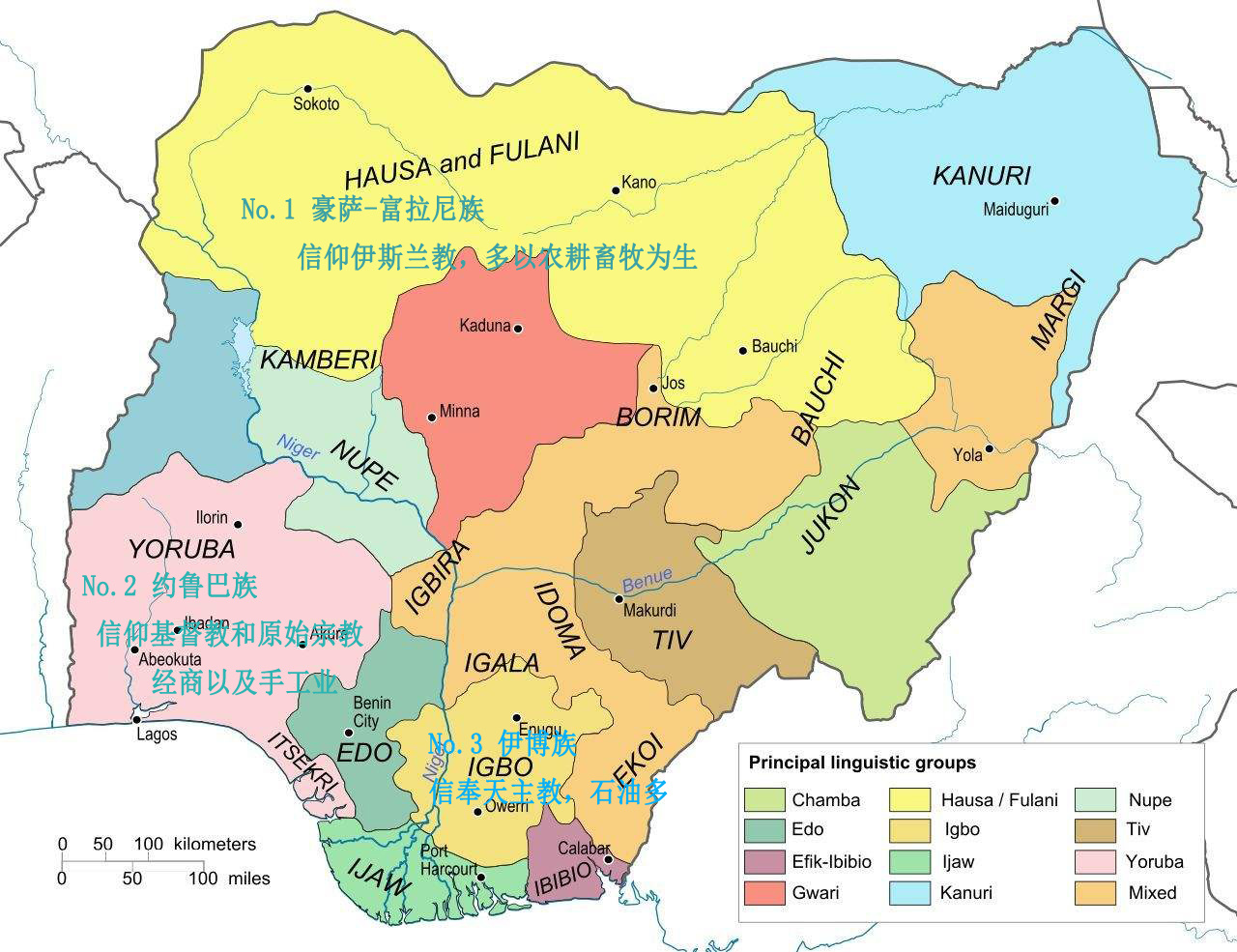
Hausa-Fulani Adherents of Islam
The Hausa are an ethnic group in the Sahel region of West Africa, primarily concentrated in northern Nigeria and southeastern Niger. Significant populations of this group also reside in Sudan, Cameroon, Ghana, Côte d'Ivoire, and Chad, while the rest are scattered throughout West Africa and along traditional pilgrimage routes from the Sahara Desert and Sahel region. Many Hausa people have migrated to neighboring major West African coastal cities such as Lagos, Accra, Kumasi, and Cotonou, but most still live in small villages, relying on farming and animal husbandry for a living. They speak Hausa, which belongs to the Chadic language family, and generally practice Islam.'

Image from: Yidian Ranking Network Hausa Bride

Hausa Women's Daily Attire

Hausa Men's Daily Attire
The Fulani tribe is one of the largest tribes in West Africa, originating in the Senegal River basin and the Fouta Djallon plateau to its south on the African continent. The Fulani are nomadic, living in the plains of Nigeria, Mali, Niger, and Burkina Faso. Fulani people enjoy tattooing; in addition to body tattoos like modern people, they also "draw" on their faces with black or reddish-brown pigments darker than their skin tone.'

Image from: China Folk Photography Association

Over a long period of development, the two ethnic groups have coexisted and intermarried, gradually assimilating and merging into the Hausa-Fulani, Nigeria's largest ethnic group, accounting for about one-third of the national population and playing a pivotal role in the country's political and economic life.'

Nigerian President Buhari (Fulani)
Yoruba Mostly Christian and traditional religions
The Yoruba people are primarily distributed in the Sahelian grasslands and tropical rainforest zones of southwestern Nigeria, with smaller populations in Benin, Togo, and Ghana. Industrial and commercially prosperous coastal areas like Lagos State are Yoruba territories. They belong to the Sudanese type of the Negroid race. Most Yoruba people engage in agriculture, growing cassava, taro, bananas, beans, cocoa, and oil palm. Yoruba women are known throughout West Africa for their business acumen. The Yoruba have always been among the most skillful and prolific artisans in Africa. They speak Yoruba, which belongs to the Niger-Congo branch of the Niger-Kordofanian language family. They have a script written in Latin characters. Most practice Christianity and traditional religions, while a minority adhere to Islam. After the 1950s, the rise of Nigeria's oil industry led to rapid economic development in the Yoruba region.'


Igbo Primarily Catholic
The Igbo are one of the main Black ethnic groups in West Africa, primarily distributed in the Niger River delta region of southeastern Nigeria, with significant populations also in Cameroon. Most Igbo people are Catholic, but they also retain many elements of traditional religions, and a small number of Igbo people practice Judaism. The Igbo speak Igbo. The Igbo were once the largest ethnic group in Nigeria, but suffered heavy losses during the Biafran War, leading many Igbo to emigrate and form large communities in places like the UK and the US. The Igbo have many taboos, one of which is the prohibition of the left hand; it is considered impolite to receive or pass objects with the left hand.'
The Igbo's small red cap (red cap) is worn by influential people.'

TIPS
Nigerian Folk Customs and Ethnic Festivals
Based on understanding, the country's customs and business taboos are summarized as follows:
(1) A large proportion of the country's population practices Islam. When communicating and interacting with Muslim businesspeople, extra care should be taken to respect their customs.'
(2) When talking to Nigerians, do not stare at them for a long time, as this will be considered disrespectful.'
(3) Locally, odd numbers are considered unlucky, while even numbers are considered lucky.'
(4) Nigerians dislike black and do not like to be photographed. If someone is seen taking photos, people will step forward to stop them.'
(5) Influenced by the British, local businesspeople are more punctual than their Middle Eastern counterparts. Maintaining punctuality will leave a good impression on others.'
(6) Government departments' office hours are from 8:00 AM to 12:30 PM and 2:00 PM to 4:30 PM. Many large companies operate on a five-day work week. However, some business can still be done on Saturdays, especially in Lagos.'
(7) When doing business with the government or public institutions, it is necessary to find an intermediary, and this person's word must be trustworthy.'
(8) Many Nigerians, regardless of their position, may ask for "red envelopes" (hongbao). This point should be noted, and actions should be taken accordingly.'
(9) Most service industry personnel accept tips.'
(10) Most Nigerians value "face" in life, but due to financial constraints, they handle matters practically. Taking cars as an example, locals love Mercedes-Benz cars, but rarely buy new ones; they often opt for second-hand or even scrapped old models discarded from the European market.'
(11) The Lagos region, especially Lagos Island and Victoria Island where many companies are located, treats land as precious. According to Chinese people who have worked there for many years, due to the chaotic local security, most Chinese choose to live in secure compounds, which usually have a considerable number of guards armed with AK47s. Homes within these compounds can accommodate 2-4 people, with an annual rent of up to 150,000 RMB.'}]}```
The main local holidays are: National Day (October 1st), New Year's Day (January 1st), Easter (March 24th-27th), Eid al-Fitr (May 7th), Mawlid (October 13th), and Christmas (December 25th-26th). Nigerians are known for their laid-back and easygoing nature. They may stop work at any time to rest and chat. During holidays, government departments and companies have no staff on duty, so business communication should avoid these periods and weekends.
Next
Latest News
Address: 9th Floor, Building 1, Xiangtai Plaza, No. 129, Yingxiongshan Road, Shizhong District, Jinan City, Shandong Province
Postcode: 250002

Official WeChat Official Account

Video Number Search
Zhenghe International Exhibition

Douyin Search
Zhenghe International Exhibition
Copyright ©