News Center

Latest US entry policy


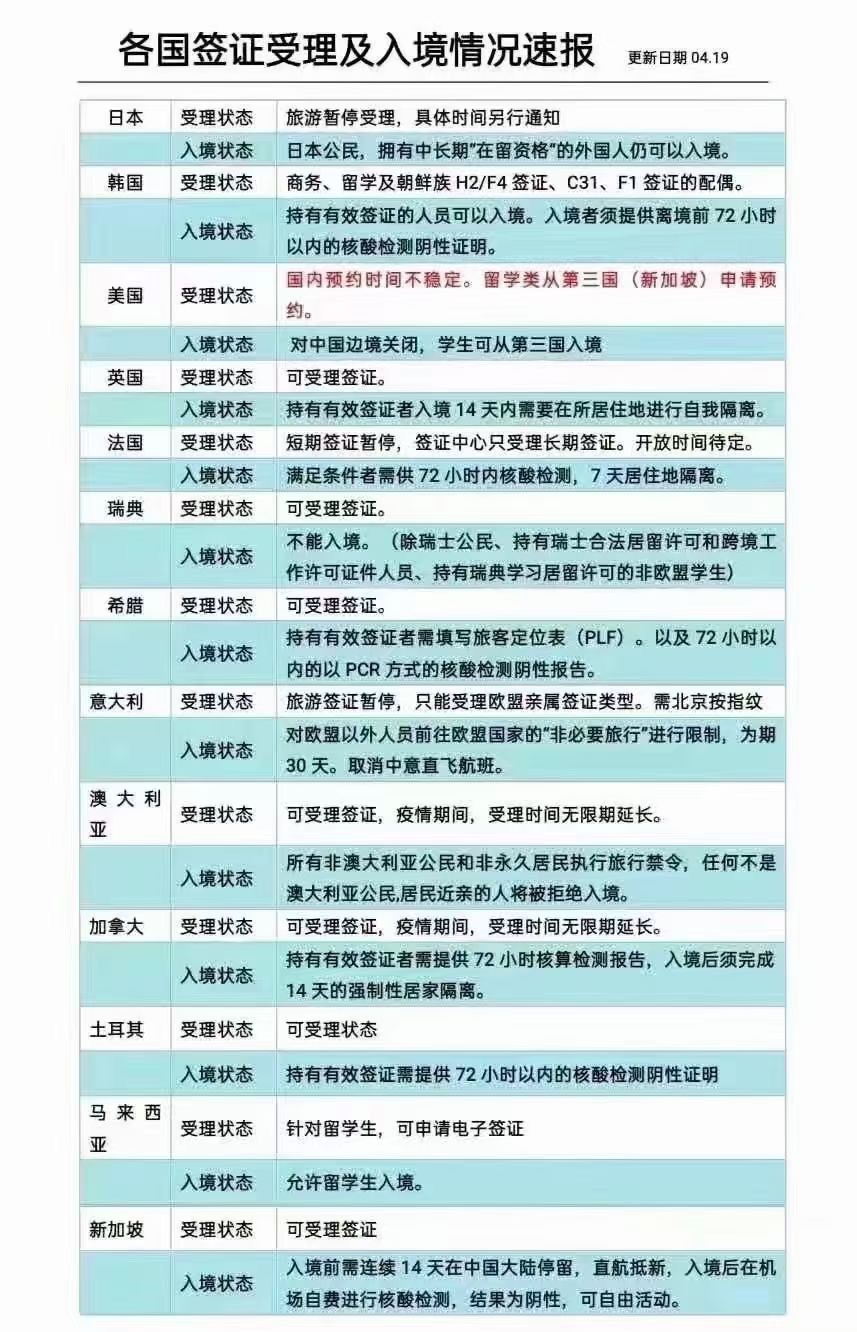
前往美国之前,需要注意的几点 一、可接受的 COVID-19 疫苗接种证明 请确保您已接种最新的 COVID-19 疫苗。如果您是非美国公民、非美国移民且未完全接种疫苗,您将不被允许登上飞往美国的航班。 国内接种完两针的人可以被视为完全接种,加强针不是必须的,美国认可中国的只有中国国药和北京科兴,国内其他疫苗尚没有被认可。 如何生成自己的国际旅行健康证(需要纸质版): 1 微信搜索小程序:防疫健康码国际版 2 出国人员入口:查看及出示国际旅行健康证明 3 开始认证:查看我的国际旅行健康码 上边有英文疫苗接种信息,打印出来。 二、有效的护照签证。 一般情况,外国公民想进入美国,必须首先取得短暂停留的非移民签证或永久居留的移民签证。非移民签证适用于以特定目的为由要在美国停留一段时间的游客、商务人士、学生或专业工作者。根据美国签证法律法规的要求,大部分非移民签证申请人须向签证官证明,其在自己国家具有牢固约束力,并且在短期停留后会离开美国。签证不保证可入境美国。签证纯粹表示美国领事官员已确定你特定的目的合资格申请入境美国。 展商参展,申请的类型为B-1/B-2商务旅游签证B-1签证颁发给赴美从事短期商务活动、参加科技/教育/专业/商务领域的会议、处置房产或洽谈合同的申请人。B-2签证颁发给赴美休闲/娱乐的申请人,包括旅游观光、探亲访友、医疗以及其他联谊、社交或服务性质的活动。B-1和B-2签证通常会合二为一,作为一类签证颁发: B-1/B-2。 申请人能够证明自己符合下述条件: 1.赴美目的是短期访问,比如参加商务/休闲/医疗活动 2.计划在美停留的时间有限且确定 3.有足够资金来支付在美停留期间的所有开销 4.在美国境外有居所并具有牢固的社会、经济联系,能够确保在赴美行程结束后如期返回   如何申请 1.完成非移民签证电子申请表(DS-160)。 2.缴纳签证申请费。 3.预约面谈。要预约面谈,需提供以下三条信息: 护照号码;签证申请缴费收据上的编号;DS-160确认页上的十(10)位条形码编号; 4.请按照约定的时间到美国大使馆或总领事馆进行面谈。请随身携带一份预约单打印件、DS-160确认页打印件、一张最近六个月内的近照以及所有新旧护照。如缺少上述任何材料,申请将不予受理。 三、申请登记新的签证更新电子系统(EVUS) 所有持10年有效期访客签证、希望前往美国的国际旅客必须登记。 什么是签证更新电子系统(EVUS)? 签证更新电子系统是指持有十年有效B1 / B2,B1或B2(访问者)签证的中国公民所使用的个人基本信息在线定期更新系统,以协助其赴美旅行。除了有效签证以外,上述旅客必须完成EVUS登记,以便获得许可进入美国。 EVUS登记将在哪一天开始强制施行? 自2016年11月29日起,所有持中华人民共和国护照,同时持有最长有效期(十年)B1 / B2,B1和B2签证的个人必须持有有效的EVUS登记才能赴美旅行。被要求进行EVUS登记的旅客如果没有有效的登记,将不能获得登机牌或者经由陆地入境口入境。 B1/B2签证有效期问题 1,绝大多数申请人的B1/B2签证有效期是10年,所有10年B1/B2签证在前往美国前,必须具备生效的美国签证系统EVUS电子签证更新。 2,只有极个别B1/B2签证低于10年,此种情况下常见1年有效期B1/B2签证,这种情况,不需要进行EVUS登记! 护照有效期问题以及有美国签证的护照换发问题 1,16岁以上的护照有效期是10年。 2,16岁以下护照有效期5年。 3,护照低于6个月有效期的禁止前往美国 因为签证有效期10年,且护照低于6个月有效期的申请人禁止前往美国;因此存在签证有效,但护照过期或者低于6个月而失效的情况,此种情形申请人需要携带旧护照前往申请人中国所在地的出入境管理局换发新护照,请将将旧护照交予出入境管理局,护照首页剪角作废,并保留美国签证。申请人注意,当你在出入境管理局时,所有不携带原始护照或者谎称护照丢失而补发的护照,该护照上面的美国签证全部作废! 4.阴性证明 航班起飞前48小时内核酸检测阴性证明。(每个航空公司规定不同,以航司要求为准) 受新冠疫情影响,各地疫情防控政策调整频繁,请在出行前务必与出发地、目的地、经停(转)地疫情管控相关单位进一步确认核酸检测报告时限要求以及落地管控政策,合理安排出行。   了解更多入境美国政策信息和常见问题:详情请登录美国疾控中心官网https://www.cdc.gov/coronavirus/2019-ncov/travelers/testing-international-air-travelers.html查看。 更多详细信息,请务必登录美国驻华大使馆微信公众号查看《CDC撤销要求在飞往美国之前提供出发前COVID-19检测阴性结果的命令》,按照官方通知为准。 (来源:美国驻华大使馆微信公众号) 以上信息供您参考。因疫情传播风险较强,目的地、经停(转)地的入境政策以及疫情防控政策可能随时调整,请您在出行前务必仔细查阅入境要求以及最新疫情防控规定,合理安排出行。

Latest COVID-19 prevention and control plan announced: Inbound travelers' quarantine changed to 7 days isolation and 3 days home monitoring.


To further guide local areas in their prevention and control of novel coronavirus pneumonia, and based on the experience gained since the release of the "Prevention and Control Scheme for Novel Coronavirus Pneumonia (Eighth Edition)", particularly in light of the rapid spread and strong concealment of the Omicron variant, the Joint Prevention and Control Mechanism of the State Council for Novel Coronavirus Pneumonia has revised the "Prevention and Control Scheme for Novel Coronavirus Pneumonia (Ninth Edition)". This scheme fully implements the overall strategy of "preventing imported cases and rebounding domestic cases" and the overall policy of "dynamic zero-COVID", effectively protecting the lives and health of the people, and coordinating epidemic prevention and control with economic and social development to the greatest extent. The main revisions compared to the eighth edition include: 1. Optimization and adjustment of the isolation management period and methods for risk personnel The isolation and control time for close contacts and inbound personnel has been adjusted from "14 days of centralized isolation medical observation + 7 days of home health monitoring" to "7 days of centralized isolation medical observation + 3 days of home health monitoring". Nucleic acid testing measures have been adjusted from "nucleic acid testing on days 1, 4, 7, and 14 of centralized isolation medical observation, collecting nasopharyngeal swabs, and double sampling and double testing before release from isolation" to "nucleic acid testing on days 1, 2, 3, 5, and 7 of centralized isolation medical observation and on day 3 of home health monitoring, collecting oropharyngeal swabs". Double sampling and double testing are no longer required before release from centralized isolation medical observation. The control measures for close contacts of close contacts have been adjusted from "7 days of centralized isolation medical observation" to "7 days of home isolation medical observation", with nucleic acid testing on days 1, 4, and 7. 2. Unified standards for the delineation of sealed and controlled areas and high- and medium-risk areas The standards and prevention and control measures for the two types of risk areas have been aligned, and the concept of high- and medium-risk areas is now uniformly used, forming a new scheme for the delineation and control of risk areas. High-risk areas implement a "no-exit, door-to-door service" policy, and are downgraded to medium-risk areas after 7 consecutive days with no new infections. Medium-risk areas are downgraded to low-risk areas after 3 consecutive days with no new infections. In other areas, personnel with a history of travel to high-risk areas within the past 7 days will be subject to 7 days of centralized isolation medical observation. Medium-risk areas implement a "no-exit, staggered collection" policy, and are downgraded to low-risk areas after 7 consecutive days with no new infections. In other areas, personnel with a history of travel to medium-risk areas within the past 7 days will be subject to 7 days of home medical observation. Low-risk areas refer to other areas in the county (city, district, banner) where medium- and high-risk areas are located, and implement "personal protection and avoidance of gatherings". In other areas, personnel with a history of travel to low-risk areas within the past 7 days are required to complete 2 nucleic acid tests within 3 days. 3. Improved epidemic monitoring requirements The frequency of nucleic acid testing for high-risk occupational groups has been increased. Nucleic acid testing for personnel in direct contact with inbound personnel, goods, and the environment has been adjusted to once a day, and nucleic acid testing for personnel in high-density, frequent contact, and high-mobility occupations has been adjusted to twice a week. Antigen testing has been added as a supplementary means of epidemic monitoring. Primary-level medical and health institutions can increase antigen testing for suspected patients and for personnel in high- and medium-risk areas during epidemic response. 4. Optimized regional nucleic acid testing strategy Clear nucleic acid testing schemes for different population sizes have been defined. For provincial capital cities and cities with a population of over 10 million, general cities, and rural areas, the source of infection after an outbreak, the existence of community transmission risks, and the clarity of the transmission chain are comprehensively assessed. Based on the level of risk, the scope and frequency of regional nucleic acid testing are determined according to a graded and classified principle. News Source | CCTV News

Get free Expo tickets; New trends in sports tourism from the perspective of the Paris Olympics; Canada and many other countries reopen borders; Ministry of Culture and Tourism releases domestic tourism data for the first half of 2021...


Following the Tokyo Olympics, France officially became the host country of the 33rd Summer Olympics and Paralympics on August 8. The "Paris 8 Minutes" performance, a prelude to the games, showcased the French flair for romance. The Paris Olympics will be held not only in traditional sports venues, but also in the city's renowned architectural heritage and landmarks, combining innovative forms with traditional sporting events. For example, the opening ceremony will be held on the Seine River, beach volleyball at the foot of the Eiffel Tower, archery at Les Invalides, cycling on the Champs-Élysées, fencing and taekwondo at the Grand Palais, equestrian events at the Palace of Versailles, triathlon at the Pont Jena, skateboarding at Place de la Concorde, and surfing in Tahiti. This will create a new viewing experience and strongly promote post-Olympic tourism. (Source: PinOrange Tourism) "For a sport, to a city!" Sports tourism becomes a new consumption trend The Data Center of the Ministry of Culture and Tourism and Mafengwo Travel jointly released the "China Sports Tourism Consumption Big Data Report (2021)". The data shows that the era of mass sports tourism has arrived! Before the epidemic, the number of people participating in sports tourism increased by 40% annually; in 2020, the total number of sports tourists reached 1 billion, and the total consumption of sports tourism exceeded 1 trillion yuan; in the first half of 2021, the search popularity of "sports tourism" increased by 115% year-on-year; from June 13 to July 13, the popularity of the keyword "travel + sports" on the Ctrip platform increased by 235% month-on-month. The epidemic made people realize the preciousness of health, and the demand for high-quality life has led more people to integrate their sports hobbies into travel, thus promoting sports tourism consumption. Domestically, popular island activities such as diving, surfing, and paragliding have quickly propelled Sanya to the top of the list of popular sports tourism destinations; Beijing, the "Double Olympic City," ranks second. Internationally, the Nara Marathon in Japan, with its "maple leaves in full bloom season, running with Nara deer," has become a distinctive marathon in the running circle; Aspen Snowmass in the United States is popular because it frequently hosts the Ski World Cup finals, serves as a training base for the US Winter Olympics, and hosts the X Games, the FIS Freestyle Ski and Snowboard World Championships, and other international events. It is evident that major sporting events can significantly enhance the attractiveness of national tourism and city brands. Today, the sports tourism industry chain, dominated by participation and viewing, is gradually becoming complete. 2021 was the year of major events such as the Tokyo Olympics, the European Cup, and the America's Cup, and it was also the sprint year for the 2022 Beijing Winter Olympics and the Qatar World Cup, ushering in a new peak in the development of sports tourism. (Source: China Tourism Academy) International Tourism Saudi Arabia welcomes international tourists from August onwards, with no quarantine and free medical insurance From August 1, Saudi Arabia will allow entry to those holding tourist visas. Tourists who have been vaccinated with vaccines officially recognized by Saudi Arabia (Pfizer, AstraZeneca, Moderna, and Johnson & Johnson) can enter and exit without quarantine upon arrival in Saudi Arabia by presenting their vaccination certificates and a negative nucleic acid test result within 72 hours of departure. In the post-epidemic era, Saudi Arabia continues to promote electronic tourist visas, and tourists from countries including China can apply for visas online and will be provided with free medical insurance for those affected by COVID-19, truly deserving its reputation as a wealthy nation with the world's second-largest oil reserves! It is also worth congratulating Saudi Arabia: On July 31, at the 44th World Heritage Conference held in Fuzhou, China, the Ḥimā Cultural Area in Najran Province was officially inscribed on the UNESCO World Heritage List. (Source: Al Arabiya Television) Thailand opens Krabi and Phang Nga to vaccinated foreign tourists in mid-August Following the launch of the "sandbox" travel plan in Phuket and Koh Samui, Thailand will reopen the nearby famous resort islands of Krabi and Phang Nga to vaccinated international tourists in mid-August. Krabi and Phang Nga plan to open selected areas under the "7+7" model: international tourists from low- and medium-risk countries, as long as they have received two doses of the vaccine (Sinovac and Sinopharm vaccines from China are certified), can enter Phuket without quarantine; the mandatory stay in Phuket has been reduced from 14 days to 7 days, after which they can stay for another 7 nights in Krabi (Phi Phi Island, Railay Beach, and Koh Lanta) and Phang Nga (Khao Sok and Phang Nga Bay). (Source: TTG China) Canada reopens borders to the world in early September, hoping to restart charter flights with China From September 7, Canada will allow travelers from all countries who have been fully vaccinated with Canadian-approved vaccines (Pfizer, Moderna, AstraZeneca, and Johnson & Johnson) to enter Canada for free travel. All travelers must submit their personal information using the Canadian government's mobile app "ArriveCAN" before boarding and provide a negative nucleic acid test result, and then they can enter Canada without quarantine. Currently, many provincial tourism bureaus in Canada have begun to attract Chinese tourists, such as 20 itineraries specifically designed for Chinese tourists, and the Nova Scotia Tourism Bureau hopes to restart direct charter flights with China as soon as possible. (Source: TTG China) Free Expo 2020 Dubai tickets with Emirates Expo 2020 Dubai will be held from October 1, 2021, to March 31, 2022. During this period, passengers who purchase tickets through official Emirates channels and fly Emirates to or via Dubai can claim a free one-day ticket to Expo 2020 Dubai. It is particularly noteworthy that the Expo 2020 Dubai mascot robot "Opti" was exclusively developed and manufactured by a Chinese technology company. At this world's most anticipated event of technological innovation and cultural exchange, Opti will serve as a "global goodwill ambassador," providing intelligent services and interactive communication for heads of state, government officials from 192 countries, and 25 million tourists, and will also play a greater role in promoting cultural and technological exchanges and cooperation between China and Arab countries. (Source: TTG China) Domestic Tourism Ministry of Culture and Tourism: 1.871 billion domestic tourist visits in the first half of 2021 On July 29, the Ministry of Culture and Tourism's Finance Department released data on domestic tourism in the first half of 2021: a total of 1.871 billion domestic tourist visits, up 100.8% year-on-year (recovering to 60.9% of the same period in 2019); domestic tourism revenue (total tourism consumption) reached 1.63 trillion yuan, up 157.9% year-on-year (recovering to 58.6% of the same period in 2019). (Source: China Tourism News)

The Japanese Embassy has announced the resumption of processing for 7 types of long-term visas and 3 types of short-term visas.


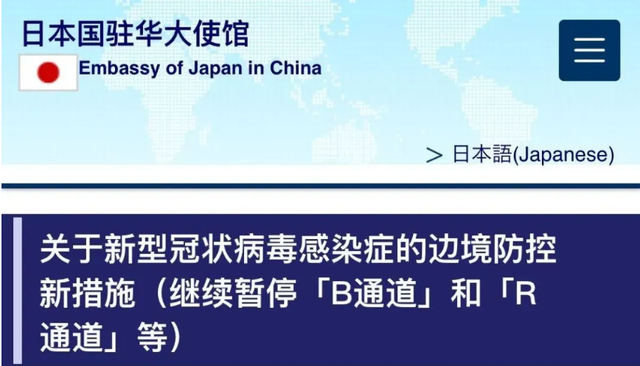
With the complete lifting of Japan's state of emergency declaration, some changes have occurred in the detailed visa application rules at the Japanese Embassy, and several new types of visas are now open for application. Many friends have been asking about visa issues, so today I've compiled a detailed introduction for everyone! Starting from March 22, the Japanese Embassy can accept the following applications for visas to Japan. Relevant personnel can submit visa application documents, and if there are no issues after embassy processing, visas will be issued. Status of Residence Category (Long-term Visa) 1. Spouses and children of Japanese nationals 2. Spouses and children of permanent residents 3. Spouses and children of long-term residents (Notice No. 5 and Notice No. 6) 4. Holders of Certificate of Eligibility (CoE) with 1584 (red annotation in the upper right corner of the CoE) 5. Status of Residence for Education and Professor (requires submission of the original urgent entry explanation from the accepting institution in Japan) 6. Status of Residence for Medical (requires submission of the original urgent entry explanation from the accepting institution in Japan) 7. Permanent residents changing to long-term resident visas Family Visit Category (Short-term Visa) 1. Spouses and children of Japanese nationals 2. Spouses and children of permanent residents 3. Spouses and children of long-term residents After Japan announced the lifting of the "state of emergency," measures prohibiting new entry for foreign nationals continue to be extended. Long-term visas such as for study abroad, and short-term visas such as for business, are still not available! Specific details are as follows: 1. Suspension of phased measures for international travel ("B Lane" and "R Lane") 2. Suspension of new entry from all countries and regions 3. Suspension of special measures for returning or re-entering Japan from all countries and regions for short-term business trips Additionally, consultations for visa applications for personnel related to the Tokyo Olympic and Paralympic Games, athletes, artists, government-sponsored international students, JICA international students, and JET Program participants have begun. Required Documents for Visa Application The required documents for visa application vary depending on the type of status of residence. Additional supplementary documents may be requested based on the needs of the visa review. 1. Documents required for all applicants (1) Visa application form (attach photo, white background, 4.5cm×4.5cm) (2) Passport (3) Copy of household registration booklet (first page and applicant's page) (4) Residence permit or other proof of residence (only for applicants whose household registration is not within the jurisdiction of this consulate) (5) Original and copy of Certificate of Eligibility 2. In addition to the above documents, the following documents are required based on the type of status of residence The above are the types of visas currently open for processing at the Japanese Embassy. With the opening of entry for government-sponsored international students, it is believed that private international students will not be far from entering Japan.

< 1234567 > proceed page