News Center

The number of ports of entry applicable to the Shandong transit visa exemption policy has increased to five.


China News Service, Jinan, December 18 (Reporter Sun Tingting) Li Zhuqun, Deputy Director-General and First-Class Inspector of the Shandong Provincial Public Security Department, said at a press conference held by the Shandong Provincial People's Government on December 18 that Shandong has added three new international airports: Jinan, Yantai, and Weihai. This brings the total number of ports in Shandong that implement the transit visa-free policy to five. The visa-free stay time for foreigners has been extended from the original 72 hours and 144 hours to 10 days (240 hours). Li Zhuqun stated that since the beginning of this year, a total of 1.486 million foreigners have entered and exited Shandong ports, a year-on-year increase of 61.1%. Among them, the number of foreigners entering through convenient policies such as transit visa exemption and port visas increased by 92.3% year-on-year, significantly boosting the number of foreigners coming to Shandong. "Foreigners with transit visa exemptions can stay within the entire administrative region of Shandong Province and can also stay and travel in designated areas of 23 other provinces that apply the policy," Li Zhuqun explained. Currently, Shandong has built an international transportation hub that "covers Shandong, radiates to the Yellow River, and reaches Central Asia, South Asia, and Europe." In addition, high-speed rail and expressways in Shandong Province operate in a ring, achieving 1-hour accessibility within the three major economic zones of the provincial capital, Jiaodong, and Runan, 2-hour accessibility within the province, and 3-hour accessibility to major cities nationwide, providing foreigners with quick and efficient transportation support for inter-provincial and inter-city activities. A press conference was held by the Shandong Provincial People's Government on December 18 to introduce Shandong's optimized implementation of the transit visa-free policy to promote high-level opening up. Photo by Sun Tingting Wang Decun, Deputy Director-General of the Shandong Exit-Entry Frontier Inspection Station, introduced that five ports—Qingdao Jiaodong, Jinan Yaoqiang, Yantai Penglai, Weihai Dashuipo international airports, and Qingdao seaport passenger terminal—have established special areas for handling temporary entry permits, achieving "point-to-point" precise guidance and "face-to-face" processing for visa-free transit personnel. In addition, Shandong has also launched a new version of the border inspection signs at ports to facilitate foreign travelers in quickly identifying and accurately obtaining relevant information at ports, improving customs clearance efficiency, and enhancing the customs clearance experience. "We have upgraded and optimized the 'self-service terminal for foreigners to fill out entry cards,' allowing foreign travelers to use smartphones to self-fill in personal information in advance, achieving 'immediate inspection,'" Wang Decun said. Border inspection agencies have set up 'passenger service stations' at entry ports to provide one-stop services such as scenic spot reservations, mobile phone card processing, and mobile payment, improving the convenience of foreign travelers in China and helping to create a market-oriented, rule-of-law, and internationalized first-class business environment. The inbound tourism market was among the first to feel the "spring breeze" brought by the visa-free policy. Recently, the topic "Korean people love to come to China after work on Friday" has been trending. Qingdao, Yantai, Zhangjiajie, and Kunming have become popular tourist destinations for Korean tourists. Sun Lei, Deputy Director-General of the Shandong Provincial Department of Culture and Tourism, said that Shandong will develop new types of products and characteristic single products such as skiing, mountaineering, cultural relics, and golf, and tap into consumption hotspots and creative scenarios with "human touch" such as food, wine, intangible cultural heritage, calligraphy, and festivals, launching more high-quality routes to meet and stimulate tourism demand with new supply. "We are studying and formulating the 'Shandong Province's Incentive Measures for Attracting Tourists to Shandong,' providing subsidies for receiving inbound tourists, inviting overseas inspections, and domestic and international publicity and marketing, giving full play to the guiding role of policies and funds, and cultivating excellent inbound tourism market entities in our province," Sun Lei said. Shandong will also conduct research on countries and regions with visa-free transit and tourist demand surveys, and implement precise measures and marketing promotion based on the interests, consumption habits, and information acquisition channels of different customer groups. It is understood that in 2024, Shandong held more than 30 cultural and tourism promotion and exchange activities in 19 countries and regions, organized nearly 500 overseas travel agents to conduct inspections and site visits, and focused on promoting inbound tourism products with the characteristics of four seasons, performing arts, and cultural relic studies, accumulating strength for cultivating the inbound tourism market. In addition, to seize the new opportunities brought by the optimized visa-free policy, Wang Hong, Deputy Director-General of the Shandong Provincial Department of Commerce, said that Shandong will establish a Shandong foreign trade high-quality product database around advantageous industries such as engineering machinery, agricultural machinery, tire auto parts, and green chemicals, accurately reaching out to procurement agents in the "visa-free circle." The province will invite global procurement agents to Shandong for direct sourcing, reducing the cost of market development for enterprises and improving the efficiency of order acceptance. "Before the Spring Festival, we will intensively organize 12 international precise procurement docking activities to release the policy dividends of expanding and optimizing visa-free policies for Shandong's foreign trade enterprises to develop the international market." (End)

Zero-tariff policy promotes win-win agricultural cooperation between China and Africa


Recently, China's granting of 100% tariff-free treatment to all product categories from all established least developed countries has officially come into effect, including 33 African countries. This will not only facilitate the arrival of high-quality African agricultural products from African fields to Chinese tables, but also further drive the development of African industries and promote poverty reduction in the region. However, it should be pointed out that this policy is not a unilateral aid policy for Africa, but a win-win cooperation between China and Africa based on mutual benefit. For many African countries, agriculture is the foundation of the national economy, and agricultural transformation and upgrading is an effective way to escape poverty. Over the past few decades, numerous empirical studies have shown that economic growth in the agricultural sector is the main contributor to raising the incomes of the poor, and its effect on poverty reduction is more than double that of any other sector. The African continent, especially sub-Saharan Africa, is still predominantly agricultural. In most countries, agriculture accounts for more than 30% of GDP, and agricultural employment accounts for more than 70% of total employment. The majority of the population lives in rural areas, making agriculture the lifeblood of these countries' socio-economic development. However, Africa's poverty is closely related to the low efficiency and limited added value of its agriculture. Expanding imports of agricultural products from Africa is just the tip of the iceberg of China-Africa agricultural cooperation. In recent years, under the frameworks of the Belt and Road Initiative and the Forum on China-Africa Cooperation, China and Africa have continuously deepened agricultural technological cooperation. China has established 24 agricultural technology demonstration centers in Africa, promoting more than 300 advanced and applicable technologies, such as dense corn planting, which has led to an average increase in crop yields of 30% to 60% in related regions, significantly improving the level of agricultural development in African countries and benefiting more than one million smallholder farmers. "China has played an important role in the modernization of agricultural development in Africa." said Rahman Tala Osman, Permanent Representative of the African Union Mission to China. China's technological advantages and policy expertise provide African countries with easy-to-understand and easy-to-learn experiences, helping to promote the sustainable development of African agricultural production while boosting farmers' income. In addition, China-Africa agricultural cooperation is not limited to production and import links, but also includes extensive cooperation between the two sides in agriculture, services, and other sectors throughout the entire process. A large number of Chinese companies have taken this opportunity to "go global" and find new "blue oceans" for development. China's labor-intensive, meticulous farming techniques provide Africa with a reference for overcoming capital constraints and technological bottlenecks. At the same time, the manual and semi-manual agricultural machinery widely used in China also has good market prospects in Africa. I know an Ethiopian deputy minister who, although not in charge of agriculture, specially showed me a video of a Chinese micro-tractor operating on his mobile phone, excitedly saying that this is what Ethiopia needs and hoping that I could help find the model and contact the importer. The vast demand brought about by the transformation and upgrading of African agriculture can be a direction for Chinese companies to consider focusing on. China-Africa agricultural cooperation is still in a stage of transformation and upgrading, and both sides have broad space for mutually beneficial cooperation. Many agricultural products exported from Africa have been mainly exported as raw materials for many years, resulting in very limited added value and profit. For example, Ghana is the world's second-largest exporter of cocoa, but the world's well-known chocolate brands mostly come from Western countries such as Belgium, Switzerland, and the United States. China has already launched cooperation projects such as "One Country, One Product: Global Action for Green Development of Characteristic Agricultural Products" in African countries in cooperation with the Food and Agriculture Organization of the United Nations. This is expected to create "African goods" with higher added value through bilateral and multilateral cooperation. Correspondingly, the demand for exhibitions, advertising services, food processing, and other fields generated by the project will also provide further cooperation and business improvement opportunities for Chinese enterprises in Africa. In recent years, the booming development of China-Africa agricultural cooperation has brought huge poverty reduction effects to the region. The win-win, or even multi-win, agricultural cooperation model between China and Africa, driven by technological innovation and cooperation, has become a vivid practice and successful case of China fulfilling its responsibilities as a major country, contributing to global poverty reduction efforts, and narrowing the global development gap. Today, the enormous potential and benefits of China-Africa agricultural cooperation have not yet been fully unleashed. As cooperation between the two sides deepens in the future, agricultural transformation and upgrading is expected to become a new highlight benefiting African countries and a solid foundation for building a China-Africa community with a shared future. (Article from Global Times, Author: Zhu Ming, Director of the Regional Cooperation Office of the Shanghai Institutes for International Studies, Visiting Researcher at the Center for African Chinese Studies, University of Johannesburg, South Africa.)

Direct sea route, unstoppable market expansion in South America! 2025 Latin America (Peru) International Food and Machinery Packaging Exhibition, full speed ahead!


On November 14, the heads of state of China and Peru jointly attended the Chancay Port inauguration ceremony via video link. The official opening of Chancay Port marks another solid step forward in the cooperation between China and Peru under the Belt and Road Initiative, providing new opportunities for maritime freight between South America and Asia. Chancay Port is located approximately 80 kilometers north of Lima, the capital of Peru. Backed by the South American continent and facing the Pacific Ocean, it boasts the advantage of a natural deep-water harbor. This geographical location makes Chancay Port a vital hub connecting South America and Asia. Phase I construction began in 2021, including 4 berths with a maximum water depth of 17.8 meters. In the initial stage, it plans to operate two 14,000TEU container ships weekly. With the expansion of the berths, it will be able to accommodate large vessels with a deadweight capacity of up to 24,000TEU. Phase I can handle 1-1.5 million TEUs and 6 million tons of bulk cargo. Upon completion of Phase II, the throughput will reach 3.5 million TEUs. Currently, no other port on the Pacific coast of South America can accommodate ships of this size, highlighting its significant scale. At the same time, Chancay Port is also the first smart port and green port invested, constructed, and operated by a Chinese enterprise in South America. In addition, the port will also construct a tunnel directly connecting to the Pan-American Highway, linking and radiating to various South American countries! It is estimated that in the future, over 130 million containers will be loaded and unloaded at Chancay Port annually. The Peruvian side calculates that this project can bring $4.5 billion in revenue to the country annually, accounting for 1.8% of GDP. In recent years, bilateral economic and trade cooperation between China and Peru has continued to deepen. Data released by the General Administration of Customs on November 14 shows that from 2016 to 2023, over an 8-year period, the average annual growth rate of China-Peru trade reached 14.6%. In the first 10 months of 2024, bilateral trade continued to grow rapidly, with China's imports from and exports to Peru reaching 254.69 billion yuan, a year-on-year increase of 16.8%. In 2013, China and Peru elevated their relationship to a comprehensive strategic partnership. In 2016, the scale of bilateral trade surpassed 100 billion yuan for the first time. As of 2023, China has been Peru's largest source of imports and largest export market for 10 consecutive years. Peru is an important source of imports for China's copper ore, fishmeal for feed, and other products. In the first 10 months, China's imports of metal ore and agricultural products from Peru reached 148.95 billion yuan and 14.47 billion yuan, respectively, with year-on-year increases of 19.2% and 23.8%, accounting for 85.5% and 8.3% of China's total imports from Peru. Among these, imports of copper ore and fishmeal for feed amounted to 5.892 million tons and 813,000 tons, respectively, accounting for 25.2% and 46.2% of China's total imports of similar products during the same period. With the opening of the Chancay-Shanghai two-way direct shipping route, the one-way sea shipping time between China and Peru will be shortened to 23 days, saving over 20% in logistics costs. Both fruit and mineral trade will benefit from this. Radiating outwards from Peru to its surroundings, goods from countries like Argentina, Brazil, and Bolivia will also be able to be transported from Chancay to China and Asia via the Pan-American Highway, deeply connecting the South American economy with China and consolidating Peru's status as a gateway connecting land and sea, linking Asia and Latin America. With the activation of Chancay Port, a new trade route between China and Peru has been opened, and Peru and surrounding South American countries have entered a new era.

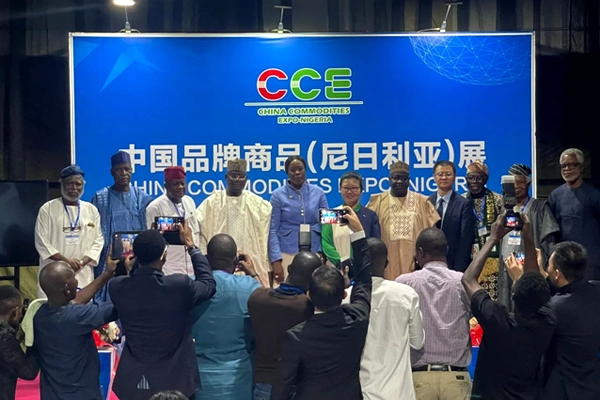
Deep cultivation of fertile soil ensures abundant blossoms - The 2025 Nigeria Lagos China Commodities Fair embarks on a new journey!


Nigeria is an important trade partner and investment destination for China in Africa, and also China's largest contracted project market in Africa. In 2023, the new contract value for Chinese enterprises' contracted engineering business in Nigeria reached 10.45 billion USD, with a turnover of 3.98 billion USD. On September 3, 2024, China and Nigeria issued a joint statement announcing the establishment of a comprehensive strategic partnership, promoting the building of a high-level China-Nigeria community with a shared future, and explicitly strengthening cooperation in areas such as infrastructure construction. Chinese Products are Hot-selling in the Nigerian Market under the Framework of China-Africa Cooperation According to data from the General Administration of Customs, from January to July 2024, China's imports and exports with Africa totaled 1.19 trillion CNY, a year-on-year increase of 5.5%. In 2023, China-Africa trade reached a historical peak of 282.1 billion USD, a year-on-year increase of 1.5%, demonstrating the strong resilience of China-Africa trade. Among them, trade between Nigeria and China is booming. In 2023, the total trade volume between China and Nigeria soared to an astonishing 281.777 billion USD, with China's exports to Nigeria reaching 172.469 billion USD, highlighting the immense appeal of Chinese products in the Nigerian market. The main hot-selling products fall into the following major categories: 1. Electromechanical Products and Agricultural Machinery Products From efficient power generation equipment to reliable electrical products, China's electromechanical products have continuously met Nigeria's growing needs and directly promoted the rapid development of its infrastructure construction. In addition, hardware tools, power tools, construction machinery, and other electromechanical products are also very popular. The import of agricultural machinery, food machinery, and packaging machinery has adapted to the development needs of Nigeria's agriculture and food processing industries. At the same time, industrial manufacturing-related electromechanical products such as machine tools provide strong support for Nigeria's industrial development. 2. Textile and Garment Products Nigeria is Africa's most populous country, with a current population exceeding 227 million, leading to huge domestic market demand. Textiles and clothing are major export items from China to Nigeria, accounting for 15% of China's total exports to Nigeria. Statistics show that in 2022, Nigeria's textile and garment imports reached 110 million USD, with China being its largest source country, accounting for approximately 47% of the total imports, almost half. As Nigeria's urbanization accelerates, more young people are eager to express themselves. In terms of fabrics, wax prints with unique craftsmanship and patterns, and brightly colored African jacquard fabrics are popular; for finished garments, shirts and sportswear with Chinese cultural elements or designs that align with local aesthetic preferences are highly sought after; regarding accessories, exquisite embroidery and unique buttons could also be among the featured products. 3. Auto Parts Products Nigeria is considered Africa's largest potential automotive market. In Nigeria, over 90% of Nigerians prefer "tokunbo" (used cars), making the "tokunbo" distribution business very profitable in Nigeria. With the Nigerian government relaxing age restrictions on imported used cars, the volume of used car imports will further increase. Therefore, the auto parts market, both upstream and downstream of Nigeria's used car industry chain, will also see more opportunities. 4. Wigs and Hair Products Eight out of every 10 Nigerian women wear wigs. Nigerian women have a particular preference for wigs and hair extensions, creating a substantial market for hair products of various sizes and prices. Furthermore, there is also significant demand for hair care products such as shampoos, relaxers, hair creams, and detangling brushes. 5. Building Materials, Hardware Accessories With the acceleration of urbanization and the continuous advancement of infrastructure construction in Africa, the African building materials and hardware market is showing vigorous development. 70% of hardware products in the African market rely on imports. The demand for hardware products is mainly concentrated in saw blades, steel pipes, and various types of mechanical hardware. From "Whether to Go" to "How to Go," Enterprises "Have a Soft Spot" for the African Market From surveying the Nigerian market in 2002 to bringing the Nigeria (Lagos) China Commodities Expo to the public's attention in 2007. In the blink of an eye, Zhenghe Exhibition has been organizing the Nigeria (Lagos) China Commodities Expo for over 17 years. Throughout the 53 years of China-Nigeria diplomatic relations, Zhenghe Exhibition has made every effort to actively assist in deepening the economic and trade relations between enterprises of both countries! Over these 17 years, we have organized thousands of enterprises from over 20 provinces and cities, including Hebei, Jilin, Liaoning, Shandong, Fujian, Zhejiang, Henan, Hubei, Hunan, Jiangsu, Anhui, Guangdong, Beijing, Shanghai, Tianjin, and Chongqing, to participate in the exhibition. Exhibits covered various fields such as agricultural machinery, vehicles and parts, construction machinery, hardware building materials, power equipment and new energy products, textiles and garments, beauty products, and daily necessities. With the strong support of the nation, we worked together with the participating enterprises to overcome difficulties, enabling each exhibiting enterprise to take root, blossom, and bear fruit in Nigeria! According to incomplete statistics, the 2024 Nigeria Lagos China Commodities Expo achieved an intended transaction volume of 82 million USD on-site, with many popular products signed on the spot. 2025, Embarking on a New Journey In nearly two decades of deeply cultivating Africa, we have witnessed the beautiful scenery and unique charm of the African continent, and even more strongly felt the African people's fervent aspiration and passionate pursuit of a better life. We have also jointly witnessed the transformation of Chinese enterprises in Africa from scratch to growth, from daily necessities to steel, aluminum, and mechanical equipment. The African market has demonstrated unprecedented investment potential and development opportunities. At this critical period in the development of China-Africa relations, Zhenghe Exhibition will actively combine our "first-mover advantage" with "African endowments," act as a bridge, and facilitate more "Made in China" products entering and becoming popular in Africa.

Helping companies expand into the North American market, the dates for the 2025 Las Vegas International Auto Parts (AAPEX SHOW) and Custom Car Show (SEMA SHOW) have been set!


The Automotive Aftermarket Products Expo (AAPEX) in Las Vegas, USA, is a professional auto parts exhibition organized by the Automotive Equipment and Parts Market Association of the United States. As the largest automotive manufacturing trade fair in North America, it receives strong support from the US Department of Commerce. AAPEX SHOW is a gathering place for high-quality buyers and sellers of auto parts and other markets from all over the world, and it is also an essential path for Chinese businesses to enter the North American and even European auto parts markets. In 2024, the AAPEX exhibition covered an area of 40,000 square meters, attracting approximately 2,700 exhibitors and more than 60,000 professional visitors, representing the leading event in the global automotive aftermarket industry, valued at over $2.3 trillion. In 2024, there were more than 1,300 exhibitors from China, with an exhibition area of nearly 13,000 square meters. The number of Chinese exhibitors accounts for approximately 50% of the total number of exhibitors. From 2007 to 2024, Zhenghe International Exhibition Co., Ltd. has served as a primary agent, organizing VIP exhibitors for 18 consecutive years. In 2024, Zhenghe Exhibition organized participating companies to showcase products including gears, bearings, springs, automotive mufflers, automotive exterior parts, brake discs/pads, radiators and their components, automotive electrical appliances, and other related auto parts. Zhenghe Exhibition's professional services and meticulous organization provide participating companies with a high-quality platform to showcase their products and expand international markets. Exhibition Name: 2025 USA Las Vegas International Auto Parts (AAPEX SHOW) and Modified Car Show (SEMA SHOW) Date: November 4-6, 2025 Location: Las Vegas, USA Exhibit Range: 1. Automotive Aftermarket Products Series: Various auto parts, seat belts, brake parts, chassis, clutches, transmissions and gearboxes, lifting equipment, service equipment, debugging equipment, special tools, repair equipment, automotive electrical appliances, audio, electronic equipment, air conditioning, anti-theft products, automotive lighting, automotive beauty supplies, automotive decoration supplies, tires and wheels, transport vehicles, etc. 2. Special exhibition areas include: mechanical repair shops; paint, body and equipment; tools and equipment; medium and heavy trucks; sport utility vehicles, automotive technology, mobile electronics/e-commerce, and international automotive associations. Market Analysis: The North American market is the world's largest auto parts demand market. The market capacity for auto parts products in the United States alone is $60 billion, with more than half relying on imports. Automotive bearings, axles, and hydraulic components are advantageous products in the North American market, with huge development potential. From the perspective of US aftermarket data, the growth of the average vehicle age is robust and irreversible, maintaining sufficient resilience even in years of declining new car sales or economic downturns, demonstrating strong counter-cyclical attributes and sufficient growth space. From the market structure perspective, the US auto parts industry has experienced large-scale mergers and acquisitions, leading to a continuous increase in concentration. The proportion of the top four auto parts companies' stores increased from 7.3% in 1995 to 49.3% in 2023. Although the US market is very large, tariff issues are worth considering for businesses. Businesses can: Diversify market layout: By diversifying market layout, tariff risks can be dispersed, and overall risk resistance can be improved. Strengthen localized production: In response to tariff issues in the US market, companies can consider establishing production bases in the US or neighboring countries to achieve localized production. This not only avoids tariff risks but also reduces logistics costs and improves product competitiveness. Utilize free trade agreements: Trading through countries or regions that have signed FTAs with the US can enjoy lower tariff rates or even zero tariffs. Improve product added value: Improve product added value through technological innovation and brand building to enhance product competitiveness. With the prosperity of the global automotive market, the overseas expansion of the auto parts industry chain has also attracted much attention. From January to September 2024, the cumulative export value of Chinese automotive parts products reached $78.2 billion, a year-on-year increase of 4.6%. The data shows that despite global economic challenges, China's auto parts exports have maintained a stable growth trend.

< 1234...102 > proceed page