News Center

Latest COVID-19 prevention and control plan announced: Inbound travelers' quarantine changed to 7 days isolation and 3 days home monitoring.


To further guide local areas in their prevention and control of novel coronavirus pneumonia, and based on the experience gained since the release of the "Prevention and Control Scheme for Novel Coronavirus Pneumonia (Eighth Edition)", particularly in light of the rapid spread and strong concealment of the Omicron variant, the Joint Prevention and Control Mechanism of the State Council for Novel Coronavirus Pneumonia has revised the "Prevention and Control Scheme for Novel Coronavirus Pneumonia (Ninth Edition)". This scheme fully implements the overall strategy of "preventing imported cases and rebounding domestic cases" and the overall policy of "dynamic zero-COVID", effectively protecting the lives and health of the people, and coordinating epidemic prevention and control with economic and social development to the greatest extent. The main revisions compared to the eighth edition include: 1. Optimization and adjustment of the isolation management period and methods for risk personnel The isolation and control time for close contacts and inbound personnel has been adjusted from "14 days of centralized isolation medical observation + 7 days of home health monitoring" to "7 days of centralized isolation medical observation + 3 days of home health monitoring". Nucleic acid testing measures have been adjusted from "nucleic acid testing on days 1, 4, 7, and 14 of centralized isolation medical observation, collecting nasopharyngeal swabs, and double sampling and double testing before release from isolation" to "nucleic acid testing on days 1, 2, 3, 5, and 7 of centralized isolation medical observation and on day 3 of home health monitoring, collecting oropharyngeal swabs". Double sampling and double testing are no longer required before release from centralized isolation medical observation. The control measures for close contacts of close contacts have been adjusted from "7 days of centralized isolation medical observation" to "7 days of home isolation medical observation", with nucleic acid testing on days 1, 4, and 7. 2. Unified standards for the delineation of sealed and controlled areas and high- and medium-risk areas The standards and prevention and control measures for the two types of risk areas have been aligned, and the concept of high- and medium-risk areas is now uniformly used, forming a new scheme for the delineation and control of risk areas. High-risk areas implement a "no-exit, door-to-door service" policy, and are downgraded to medium-risk areas after 7 consecutive days with no new infections. Medium-risk areas are downgraded to low-risk areas after 3 consecutive days with no new infections. In other areas, personnel with a history of travel to high-risk areas within the past 7 days will be subject to 7 days of centralized isolation medical observation. Medium-risk areas implement a "no-exit, staggered collection" policy, and are downgraded to low-risk areas after 7 consecutive days with no new infections. In other areas, personnel with a history of travel to medium-risk areas within the past 7 days will be subject to 7 days of home medical observation. Low-risk areas refer to other areas in the county (city, district, banner) where medium- and high-risk areas are located, and implement "personal protection and avoidance of gatherings". In other areas, personnel with a history of travel to low-risk areas within the past 7 days are required to complete 2 nucleic acid tests within 3 days. 3. Improved epidemic monitoring requirements The frequency of nucleic acid testing for high-risk occupational groups has been increased. Nucleic acid testing for personnel in direct contact with inbound personnel, goods, and the environment has been adjusted to once a day, and nucleic acid testing for personnel in high-density, frequent contact, and high-mobility occupations has been adjusted to twice a week. Antigen testing has been added as a supplementary means of epidemic monitoring. Primary-level medical and health institutions can increase antigen testing for suspected patients and for personnel in high- and medium-risk areas during epidemic response. 4. Optimized regional nucleic acid testing strategy Clear nucleic acid testing schemes for different population sizes have been defined. For provincial capital cities and cities with a population of over 10 million, general cities, and rural areas, the source of infection after an outbreak, the existence of community transmission risks, and the clarity of the transmission chain are comprehensively assessed. Based on the level of risk, the scope and frequency of regional nucleic acid testing are determined according to a graded and classified principle. News Source | CCTV News

Shandong's foreign trade shows strong vitality from January to May


According to statistics from Qingdao Customs, Shandong Province's foreign trade imports and exports totaled 1.27 trillion yuan in the first five months, a year-on-year increase of 17.3%. Exports reached 757.25 billion yuan, up 26.8%, while imports reached 512.78 billion yuan, up 5.6%. In the ranking of the top six provinces and cities in terms of import and export growth, Shandong ranked third, after Beijing and Zhejiang; its export growth rate ranked first; and its import growth rate ranked fourth, after Beijing, Zhejiang, and Jiangsu. Shandong's import and export, export, and import growth rates all exceeded the national average. In May, Shandong's import and export value jumped to fourth place nationally. Import and export value in May reached 299.95 billion yuan, a year-on-year increase of 28.0%. Exports reached 184.57 billion yuan, up 41.8%, while imports reached 115.38 billion yuan, up 10.7%. According to relevant personnel from the Shandong Provincial Department of Commerce, the main characteristics of Shandong's foreign trade imports and exports in the first five months are: Zaoyang, Weifang, Jining, Taian, Jinan, Binzhou, and Heze showed higher growth rates. In the first five months, Qingdao's imports and exports totaled 339.08 billion yuan, an increase of 6.8%, accounting for 26.7% of Shandong Province's total imports and exports during the same period, a decrease of 2.6 percentage points. Zaoyang, Weifang, Jining, Taian, Jinan, Binzhou, and Heze's import and export growth rates exceeded the provincial average, reaching 121.2%, 64.8%, 48.7%, 43.3%, 39.3%, 32.9%, and 30.2% respectively. General trade and bonded logistics imports and exports maintained rapid growth. In the first five months, Shandong's general trade imports and exports totaled 844.35 billion yuan, an increase of 16.3%, accounting for 66.5% of the province's total imports and exports. During the same period, bonded logistics imports and exports totaled 212.16 billion yuan, an increase of 54.4%; processing trade imports and exports totaled 182.32 billion yuan, an increase of 2.4%. Private and state-owned enterprises' imports and exports grew rapidly, while foreign-invested enterprises' growth was relatively low. In the first five months, private enterprises in Shandong's imports and exports totaled 919.92 billion yuan, an increase of 22.5%, accounting for 72.4% of the province's total imports and exports, an increase of 3.1 percentage points. During the same period, foreign-invested enterprises' imports and exports totaled 236.82 billion yuan, an increase of 0.7%; and state-owned enterprises' imports and exports totaled 112.88 billion yuan, an increase of 19.0%. Imports and exports to most major markets maintained growth, with faster growth in imports and exports to countries along the Belt and Road. In the first five months, ASEAN, the United States, the European Union, South Korea, Japan, Russia, and Brazil were Shandong's top seven trading partners, accounting for a total of 62.4% of the province's total foreign trade imports and exports. Imports and exports with ASEAN totaled 224.56 billion yuan, an increase of 44.5%; with the United States, 140.26 billion yuan, an increase of 18.9%; with the European Union, 117.53 billion yuan, an increase of 10.5%; with South Korea, 111.64 billion yuan, an increase of 9.7%; with Japan, 77.95 billion yuan, an increase of 13.1%; with Russia, 61.14 billion yuan, an increase of 30.0%; and with Brazil, 59.02 billion yuan, a decrease of 11.3%. During the same period, Shandong's imports and exports with other RCEP member countries totaled 470.9 billion yuan, an increase of 22.2%, accounting for 37.1% of the province's total imports and exports, an increase of 1.5 percentage points. Imports and exports with countries and regions along the Belt and Road totaled 461.16 billion yuan, an increase of 33.8%, accounting for 36.3% of the province's total imports and exports, an increase of 4.5 percentage points. Exports of electromechanical products, labor-intensive products, and agricultural products all maintained double-digit growth. In the first five months, Shandong's exports of electromechanical products totaled 315.81 billion yuan, an increase of 21.1%, accounting for 41.7% of total exports. Exports of auto parts totaled 48.14 billion yuan, an increase of 15.1%; electrical equipment, 19.55 billion yuan, an increase of 48.9%; and electronic components, 18 billion yuan, an increase of 47.4%. During the same period, exports of labor-intensive products totaled 146.85 billion yuan, an increase of 27.6%, accounting for 19.4% of total exports; and agricultural product exports totaled 54.48 billion yuan, an increase of 11.5%, accounting for 7.2% of total exports. Imports of crude oil and soybeans decreased in volume but increased in value, while imports of iron ore decreased in both volume and value; imports of electromechanical products maintained rapid growth. In the first five months, Shandong's imports of 14 major bulk commodities totaled 297.31 billion yuan, an increase of 6.5%, accounting for 58.0% of total imports, an increase of 0.5 percentage points, driving import growth by 3.7 percentage points. Crude oil imports totaled 35.538 million tons, a decrease of 21.0%, with a value of 156.69 billion yuan, an increase of 17.1%, and an average price of 4409.2 yuan per ton, an increase of 48.2%; iron ore imports totaled 41.545 million tons, a decrease of 23.3%, with a value of 32.72 billion yuan, a decrease of 44.5%, and an average price of 787.5 yuan per ton, a decrease of 27.7%. During the same period, imports of electromechanical products totaled 95.18 billion yuan, an increase of 12.1%; and agricultural product imports totaled 59.75 billion yuan, an increase of 0.2%. Since the beginning of this year, Shandong has continuously strengthened policy supply, issuing the "Action Plan for Stabilizing and Improving Foreign Trade in 2022", proposing 32 policy measures focusing on improving the development level of new formats, strengthening financial guarantees, expanding export credit insurance, foreign exchange hedging, smoothing international freight, and customs clearance facilitation, to promote the continuous growth of the scale of goods trade.

Restarting the South American exhibition | Registration is underway for the Bogota International Industrial Exhibition in Colombia


展会名称:2022年哥伦比亚国际工业展览会 展出地点:哥伦比亚-波哥大-国际商务会展中心 展览日期:2022年9月26-30日 展出周期:两年一届 中国区总代:山东正和国际展览有限责任公司 参展方式:线下参展或远程参展 展会简介波哥大工业展始于1954年,每两年一届,由哥伦比亚最大的展览公司--CORFERIAS国际展览公司主办。作为哥伦比亚规模最大和历史最悠久的工业展会,该展其影响力已覆盖了整个南美地区。2018年波哥大工业展有638家企业参展,参展面积达61418平方米,共有来自德国、奥地利、比利时、巴西、加拿大、波哥大、古巴、西班牙、丹麦、美国、波利维亚、法国、意大利、荷兰、中国、瑞士、委内瑞拉等近二十个国家53442名专业观众参观该展。 展品范围1、机床及金属加工技术金属切削机床,金属成型机床,齿轮加工机床,表面处理,检测设备,切削刀具,自动化设备,测量仪器,电火花切割设备,焊接设备及技术,等离子、水流、激光切等氧气切割设备,工业设备、流体及润滑系统,空气、液压及气动自动化;气动手动工具,控制技术,机器人技术,诊断传感技术、周边设备及服务,各类机床附件。 2、冶金及铸造(1)转包和分承包:铸锻件,轴承、紧固件、金属成品件、固体成型,非切割技术零件,机切割金属零件,汽车配件,部件装配和金属结构,工具和制模,标准件、模具、汽车零部件、锁及配件,塑料零件和橡胶加工,生产装配服务,金属熔炉、退火炉等。(2)材料:钢、铝和其他金属,陶瓷,聚合物(工程材料),复合材料等各种不同的工业用材料及化合物等。 3.传动技术(1)流体动力传动:液压技术,气动技术,密封技术。(2)机械传动、零部件及制造设备、技术:齿轮传动,链传动、带传动,传动联结件,紧固件,各类机械装备及测验仪器,轴承及其轴承零部件,直线运动系统,直线运动驱动元件/系统,直线运动系统,电动机械制动装置等,电气传动,压缩空气技术。 4.工业自动化(1)电气传动:普通工业电机,特殊工业电机,伺服电机,通用小型电机,专用设计小型电机,变频、变流器装置和元件,电驱动控制系统,电驱动调速器,电磁装备、磁铁,电动马达元器件等。(2)电气工程:控制技术,测量技术,调节器技术,工业用计算机,网络/工业通讯,无线电自动化,嵌入式系统,传感器系统,工业图象处理,检测设备。(3)机械工程:汽车、飞机、船舶、高端机械制造等自动化流水线,机械臂、智能生产、装配设备及技术。(4)机器人技术:焊接机器人、喷涂机器人、搬运机器人、装配机器人、直角坐标机器人、其他工业机器人等;工业图像系统处理;工业镜头、工业相机、光源系统、机器视觉集成系统配件和辅助产品等。(5)自动化仪器仪表:智能化仪表,变送器,调节器,流量仪,控制阀,执行器及调节阀,定位器,称重装置,传感器等。 5.制冷、空调及通风设备(1)制冷设备制冷系统与设备,制冷系统与设备的零配件,冷却系统与冷柜,冷藏格、冷冻格,运输制冷系统,冷藏集装箱,冷藏与冷冻食品柜零配件。(2)建筑空调与通风通风与空调系统设施,流动空气处理装置。(3)制冷与空调的测量器具温度计、压力计、湿度表、其它。(4)制冷与空调设备的组装管道与附件,焊接材料与配件,密封材料,维修件、五金件,绝缘材料,热导体。(5)制冷与空调工具与设备制冷与空调专用工具、电焊设备、验漏器、清洁器具与材料、排空与充填设备、除垢与水处理设备的安装、废物处理与回收设备、货物与载客电梯、专用车辆。 6.塑料机械(1)机械类:注塑和挤出机,塑料制造机械,塑钢门窗机械与设备,配件,工具,吹瓶机,塑料灌装机械和设备,及质量检测仪器等.(2)模具类:塑料橡胶类模具和模型,用于食品工业,建筑工业,汽车工业,电子工业,医药工业,交通运输行业以及家用等;协作加工,模具机床,模具标准件,模具材料,模具工具,成型设备等。(3)材料类:原材料,新型可降解材料,涂料,着色剂,改良剂,塑料添加剂和辅助剂,塑料合成材料,各类成品及半成品,铝箔材料,医疗材料及渔具材料等;FRP原材料,FRP相关设备装置(成型装置,循环利用,成型件等);各种塑料制品,塑料薄膜,橡塑制品.(4)橡胶机械类:橡胶挤出机、混炼机、橡胶类(造粒机、裁断机、硫化罐、贴合机、成型机、定型机、接头机、硫化机、脱硫机、制袋机、压延机等 7、工程及矿业机械(1)挖掘机械;岩凿机械及采矿设备; 工程钻探机械及掘进机; 铲土运输机械; 钢筋和预应力机械; 气动工具; 混凝土机械; 装修机械; 桩工机械; 路面机械; 压实机械; 工程起重机械; 市政工程与环卫机械; 机动工业车辆; 动力装置及配件; 建筑机械及工程机械配件;选矿设备;冶炼设备;矿业装卸设备;矿业输送设备;矿山施工设备;地矿勘测设备;工程车辆。(2)矿产勘探技术、矿藏加工、矿产冶炼技术、矿产开采、回收与再利用、矿产工业安全技术、地表矿产、矿产品深加工、原材料加工与处理、矿产运输与物流技术。(3)具体展品有:采矿机械设备;铲运机, 运输车(起重机、输送带、地下装载机和卡车,矿井电气火车头);露天坑口技术;辅助机械和设备(压缩机、柴油发电机、地下燃料加油机、运输设备、岩石粉碎机);开矿工程工具与设备,硬金属工具,研磨剂,金刚刀具;工艺设备;采矿工程通风;钻探技术和爆破材料;选矿设备;冶炼设备;矿业装卸设备;矿业输送设备;矿山施工设备;地矿勘测设备;工程车辆。地块应力与变形状况的探测装置;自然生态系统控制装置与设备;工程与测量工作装置;防爆电气设备等。(4)挖掘机械:挖掘机挖掘装载机挖沟机;(5)岩凿机械:钻车凿岩机破碎机压缩机;(6)铲土运输机械:运输车推土机铲运机平地机;电动工具;(7)桩工机械:桩机柴油打桩锤液压剪桩机钻孔机;(8)工程钻探机械及掘进机:锚固钻机潜孔钻机非开挖导向钻机冲击式钻机;(9)工程起重机械:汽车起重机卷扬机龙门吊高空作业平台。 8、能源技术及设备(1)发电设备:水利发电设备、火电发电设备、太阳能发电系统、风力发电机组;交流、直流发电机、便携式发电机;涡轮机、转子等发电相关组件;(2)电力、电工测控仪器:电力测量和自动控制系统,电力仪表仪器、绝缘监测设备,损耗测量设备、电缆故障定位设备、遥控操作系统,继电器、断路器、互感器、电容器、启动器、补偿器、防雷器、绝缘子等;(3)电气自动化技术与设备:中低压电网配电产品,电气控制与自动化成套设备,配网自动化、MIS系统、电网调度管理系统,电力通信设备,电力信息技术及IT集成产品,电力电子产品与技术,低压开关装置、防爆开关装置、开关的控制集成电路;(4)输电、配电设备及附件:变压器、整流器、电流接触器、电力稳压器、电加热设备,电网及输配网自动化系统,电力输送设备及配件,导体、电缆、绝缘电缆、电力电缆装置、通讯电缆系统、电缆的铺设、储存和处理设备,绝缘绝热的插座装置、绝缘体及材料,电力施工设备及五金工具;(5)新能源设备及技术:通光伏太阳能膜板、组件,太阳能畜电池,光伏膜,光伏照明系统太阳能电池;风电机组配套设备及部件,叶片及其相关材料,风光互补发电系统,雷电防护系统,控制系统、远程监控系统,海上风电设备及技术;核岛、反应堆及其冷却系统;堆芯燃料,核燃料组件、稳压器、常规岛、涡轮发电机、汽轮机、发电机、变压器、凝汽器、汽水分离再热器,核电电池,核电油漆等; 9、物流运输工业卡车、升降装置、起重机、升降平台、单件/散装材料连续物料搬运操作系统、物流控制系统、操作和仓储设备、无人驾驶运输系统及相关元件、附件及相关元件、物流管理:设备、硬件、软件系统、物流服务、调配,订单处理及包装设备、打包设备和智能标签、信息通讯业务、导航和行程安排提货、财务服务、咨询、物流产权, 物流特区, 物流工具和物流金融等、物流港口装卸项目,物流合约和传送、3PL (三方物流) 和4PL (四方物流)。 10.安防设备及技术(1)安防:CCTV闭路系统,监控系统/监视器,红外/高清高速球,DVR高性能存储及系统,信号接收设备,门禁/家用防入侵警报系统,可移动传感器,探测仪,中控系统/控制板,信号转换器,身份识别设备,对讲机,无线读卡,条形码,锁,车/门监视系统,警用装备,装甲车辆,防弹玻璃,电子巡逻监控设备,巡逻车辆,云台。(2)防护:个人(头、眼、口鼻、听觉、身体、四肢)防护设备,制服/鞋/帽/手套/眼镜,高空作业保护设备,职业安全/职业健康材料,风险分析系统/风险规避设备,运输/交通安全设备/材料,生化防控服/设备/材料,噪音防控设备,环境保护材料。(3)消防和救援:(明火、烟雾、过热)探测/报警系统和装备,消防监控系统,防火剂/灭火剂,防火/灭火系统/设备,防火材料/防火设施,救护材料/救护设施,逃生设备/应急系统,疏散系统/标志材料/应急灯/电池,营救系统/营救设备/生命探测设备,紧急救援飞行机/车/船,防毒设备/防毒材料/控毒系统,消防车/救护车及配备。 (4)信息安全:信息(电信、通讯)技术安全技术/系统/设备/软件,加密/解密技术,风险分析/处理技术/系统,网络/数据安全系统/软件,身份识别安全系统/软件,无线网络/通讯安全设备/系统/软件,防病毒硬/软件,银行系统。(5)智能及楼宇自动化:建筑管理系统,遥控系统,智能卡,自动识别/门禁系统,通讯系统/内部通讯系统,可视门禁识别/对讲设备,逃生设备/应急系统/应急设备,停车/停车场管理系统/设备,智能制冷/制热温控系统,照明系统,智能门禁/围栏设备,电动卷门,电脑/自动化软件,办公智能设备,会议/显示/陈列设备/软件,酒店服务/银行/学校/政府设备。(6)警用设备:金属探测器,安检门,X光机,反恐排爆,警棍,保安器材,物品检查,身份识别,食品检查。 正和走进波哥大工业展在2018届波哥大工业展中正和展览组织参展企业十余家,涉及轴承、工程机械及配件、数控机床类、激光切割设备等多个行业。 联系方式 山东正和国际展览有限责任公司 济南市市中区英雄山路129号祥泰广场1号楼905室 韩士江:0531-67815795 吴立明:0531-86975005 段   琦:0531-82761908

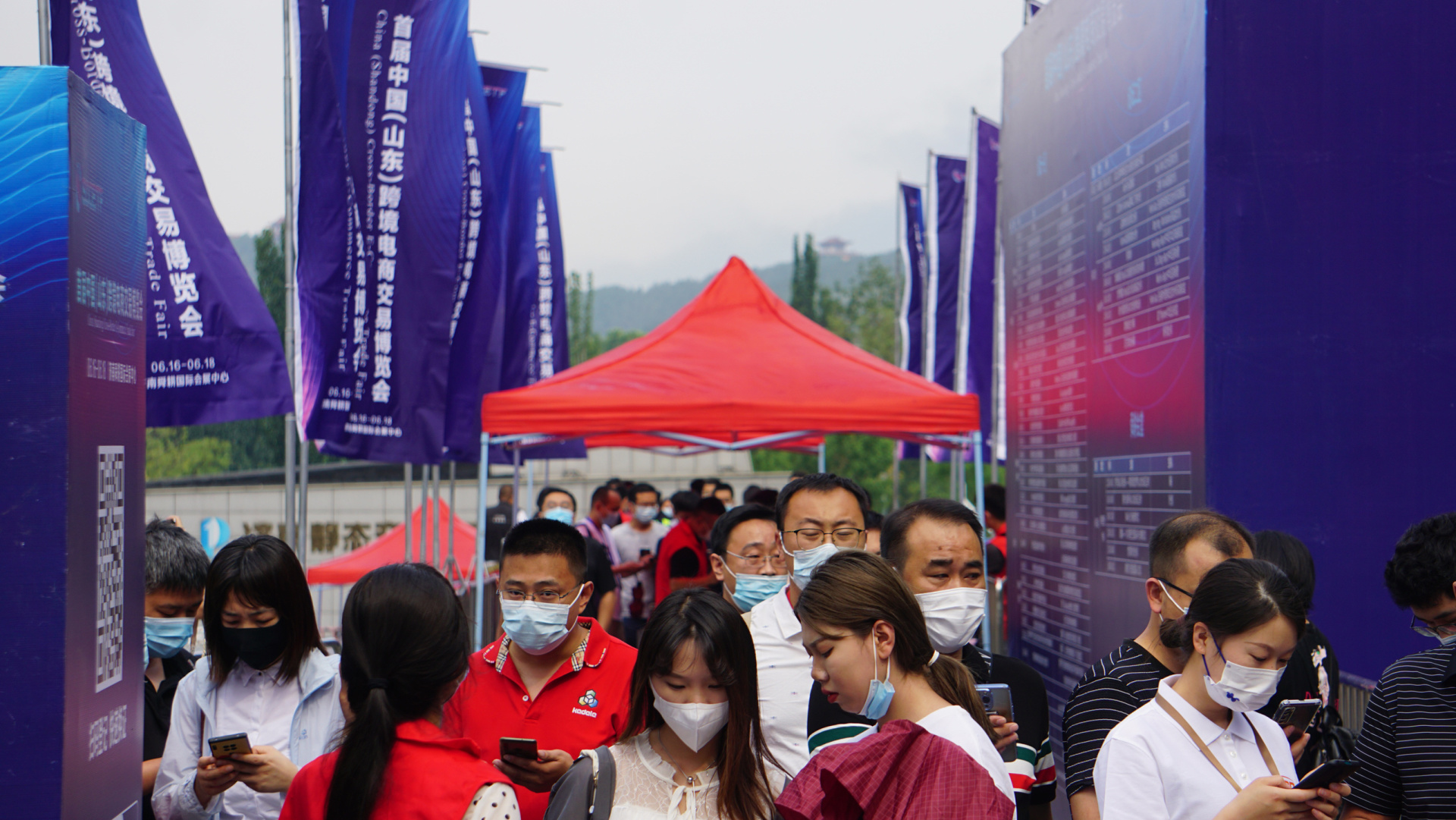
The First China (Shandong) Cross-border E-commerce Trade Expo was successfully held in Jinan.


From June 16th to 18th, the first China (Shandong) Cross-border E-commerce Trade Expo (hereinafter referred to as "Shandong Cross-border E-commerce Expo"), Shandong's first provincial-level professional cross-border e-commerce exhibition, opened successfully at the Jinan Shuneng International Convention and Exhibition Center! The exhibition was hosted by the Shandong Cross-border E-commerce Association. To implement the Party Central Committee and the State Council's decisions and deployments on accelerating the development of new formats and models in foreign trade, implement the requirements of "carrying out cross-border e-commerce plans" proposed by Secretary Li Ganjie of the Provincial Party Committee in the report of the 12th Provincial Party Congress, and implement the "Implementation Plan for Innovative Development of Foreign Trade in Shandong Province (2021-2022)", the first Shandong Cross-border E-commerce Expo, themed "i on Shandong, e-linking the world", focuses on the deep integration of Shandong's characteristic industries and cross-border e-commerce, fully connecting "Shandong manufacturing" with the international market, actively serving the construction of a new development pattern with domestic and international dual circulation, and is an important exhibition to help enterprises cope with the impact of the epidemic, explore new opportunities in cross-border e-commerce, and promote the stable and improved quality of foreign trade. The exhibition site received support from cross-border e-commerce industry associations and key enterprises from 17 provinces and cities in the north and south. With a total exhibition area of 20,000 square meters, it brings together global well-known cross-border e-commerce platforms, service providers, and high-quality product suppliers. It sets up six exhibition areas: cross-border e-commerce selection area, industrial belt exhibition area, platform exhibition area, service provider exhibition area, park and city exhibition area, and RCEP import area. Exhibitors include 138 production enterprises from 19 characteristic industrial belts such as Jinan auto parts and textiles, Qingdao wigs and eyelashes, Weihai fishing gear, Rizhao fitness equipment and hardware tools, Jining ice and snow sportswear, Linyi straw and willow weaving, Heze wood crafts, and Binzhou aluminum crafts; 17 globally renowned cross-border e-commerce platforms such as Amazon, Alibaba International Station, eBay, AliExpress, Wish, Lazada, Newegg, and Coupang; and 82 leading cross-border e-commerce service providers in the fields of cross-border logistics, ERP, product selection tools, cross-border payments, website building, and search. Ten thousand professional visitors were invited to attend for product selection and exchange, and cross-border e-commerce docking activities were held concurrently, fully creating a cross-border e-commerce brand exhibition integrating image display, product promotion, trade talks, professional forums, and investment promotion. The exhibition set up three forum areas. On the first day, the Jiaozhou Industrial Belt Procurement Docking Conference and Jiaozhou Industrial Belt Investment Promotion Conference were held, with precise procurement docking on site, and exciting activities such as the Cross-border E-commerce Platform Comprehensive Forum, Amazon Global Opening Store Special Session, and Alibaba International Station Special Session attracted many visitors to stop and exchange. Through ecosystem building, promotion of characteristic industrial belts, and carrier investment promotion, the exhibition helps to optimize the integration of industry resources, helps enterprises solve various problems encountered in the process of going global in cross-border e-commerce, improves the structure and efficiency of the supply chain and service chain, and meets the different needs of exhibitors and professional visitors in a one-stop shop. This exhibition was undertaken by Shandong Zhenghe International Exhibition Co., Ltd.

< 1...151617...102 > proceed page