News Center

Zhenghe Exhibition visited Nigerian automotive technology and other industry associations to promote cooperation on the 2025 Nigeria (Lagos) China Goods Expo.


From January 3rd to 6th, 2025, representatives from Zhenghe Exhibition's overseas employees visited the secretariat of the Nigerian Automotive Technology Association (NATA), the Auto Mechanics and Technicians Union of Nigeria (AUOMMATON), and the Mechanical and Technical Personnel Association of Nigeria (MOMTAN). The purpose of these visits was to conduct in-depth discussions and coordination regarding cooperation for the 2025 Nigeria (Lagos) China Commodity Expo. During the meetings, Zhenghe Exhibition's overseas representatives introduced the basic situation of the Nigeria (Lagos) China Commodity Expo to the heads of the associations. The heads of the associations acknowledged the significant achievements of the expo in recent years. In the exchange, the three industry association heads detailed their respective situations. As leaders and promoters of automotive industry-related associations in Nigeria, the three associations have a wide influence in Nigeria and even West Africa. Against the backdrop of the continuously deepening and upgrading of China-Africa cooperation, they have high expectations for actively promoting trade cooperation between China and Nigeria in the automotive industry. The heads of the associations also expressed their willingness to work with Zhenghe International Exhibition to jointly promote the sustainable development of the Nigeria (Lagos) China Commodity Expo, to organize member units to participate in the expo, and to conduct one-on-one docking and negotiations with Chinese exhibitors. As Africa's second-largest economy and most populous country, Nigeria has a huge demand for automotive and auto parts products, mainly relying on imports. In Nigeria, over 90% of Nigerians prefer to choose tokunbo (used cars), making the tokunbo distribution business very profitable. With the Nigerian government relaxing the age restrictions on imported used cars, the import volume of used cars will further increase. Therefore, the auto parts market in the upstream and downstream of Nigeria's used car industry will also usher in more opportunities. After years of operation by Chinese automakers, Chinese cars have established considerable prestige in Nigeria. At the same time, the limited number of local auto repair shops and the high cost of parts in Nigeria also make the potential for exporting Chinese auto parts to the Nigerian market huge. 2025 Nigeria (Lagos) Machinery and Equipment Exhibition Exhibition Time: November 5th-7th, 2025 Exhibition Venue: Landmark Exhibition Centre, Lagos, Nigeria Exhibition Introduction: The Nigeria (Lagos) Machinery and Equipment Exhibition is one of the most influential machinery and equipment exhibitions in West Africa. It is the best way for local and surrounding countries to find products and suppliers, and it is also the best place for Chinese companies to showcase their corporate image and explore the West African market. Nigeria's domestic industry is in its infancy, with over 90% of machinery and equipment relying on foreign imports. This presents a rare development opportunity for Chinese machinery companies. Exhibit Range: Agricultural machinery, construction machinery, woodworking machinery, engineering machinery, mining machinery, power equipment, machine tools, vehicles and parts, food packaging machinery, electrical appliances, environmental protection machinery, mechanical components, other civil machinery, etc. 2025 Nigeria (Lagos) China Commodity Expo Exhibition Time: November 5th-7th, 2025 Exhibition Venue: Landmark Exhibition Centre, Lagos, Nigeria Exhibition Introduction: The Nigeria (Lagos) China Commodity Expo has been successfully held for 17 sessions. The exhibition has received the support of the Nigerian Federal Government and the Lagos State Government and is one of the well-known brand exhibitions in Nigeria. After twenty years of cultivation, the exhibition has become the most important platform for economic and trade exchanges and cooperation in Nigeria and even West Africa, helping Chinese companies to explore the African market and grasp new markets, new opportunities, and new tracks of the Belt and Road Initiative. Exhibit Range: Home appliances and household goods, communication and electronic products, food seasonings, solar energy and photovoltaic products, plastics and industrial products, hardware and building materials, daily necessities, cultural and office supplies, personal protective equipment and medical devices, etc.

Interview with the Nigerian Trade Commissioner to China: Cooperation for mutual benefit, continuing to expand the China-Nigeria trade basket


In recent years, trade and investment relations between China and Nigeria have continued to deepen and materialize. Recently, a reporter from China Youth Daily and China Youth Net interviewed Ibrahim A. Ahmed, Trade Attaché of the Consulate General of Nigeria in Shanghai (Trade Section). He stated that the strong momentum of economic relations between the two countries has not weakened, and the diversification of trade products and increased economic cooperation are the main factors driving this trend. "The trade volume between Nigeria and China has always been substantial and continues to grow, despite some fluctuations." Ahmed pointed out that Nigeria's exports to China mainly include agricultural products and mineral resources, while imports from China are primarily electrical equipment, machinery, textiles, and agricultural machinery. The deepening of China-Nigeria bilateral trade is inseparable from the economic complementarity between the two sides. Ahmed stated that based on their respective resource endowments, industrial structures, and development needs, the two countries have strong economic complementarity. "Nigeria can benefit from China's manufacturing strength by importing high-quality and reasonably priced products." Looking ahead, Ahmed believes that the two countries can continue to expand their trade basket through various means, such as signing trade agreements, organizing trade fairs, and facilitating market access for each other's goods and services. Ahmed told a China Youth Daily and China Youth Net reporter that under the "Belt and Road" initiative, Nigeria and China have welcomed new opportunities for economic and trade cooperation. In recent years, with the continuous growth of China-Nigeria bilateral trade, more and more Chinese enterprises have established themselves in Nigeria, constantly contributing to bilateral trade cooperation. Ahmed stated that Chinese companies have invested heavily in Nigeria's infrastructure sector, especially in road construction, railways, bridges, and ports. "These investments help improve Nigeria's transportation network and promote economic growth." He cited examples: the Lagos-Ibadan Expressway has significantly improved transportation between Nigeria's two largest cities; the Abuja-Kaduna Railway is a key railway line connecting the capital Abuja with Kaduna, promoting faster and more efficient movement of goods and people. Moreover, Chinese companies have also invested in numerous renewable energy projects in Nigeria, improving the local energy structure, such as the Mambilla Hydropower Project, which has increased Nigeria's power generation capacity. In addition, Chinese telecommunication companies have played a crucial role in expanding and upgrading Nigeria's telecommunications infrastructure, enabling Nigeria to gain wider access to mobile and internet services. "I hope that Chinese enterprises can invest more in Nigeria, especially in key areas such as infrastructure, manufacturing, agriculture, and energy, which are crucial for Nigeria's economic growth," said Ahmed. Although Chinese enterprises have made significant investments and progress in Nigeria, they still face some challenges. Ahmed pointed out that changes in government policies and regulations may affect Chinese investments in Nigeria, creating uncertainty and risks for Chinese enterprises. Furthermore, with an increasing number of foreign investors entering the local market, competition intensifies, especially in sectors such as telecommunications and manufacturing, which leads to challenges for Chinese enterprises in maintaining market share and profitability. In response, Ahmed proposed a series of solutions. He suggested that the governments of both sides should strengthen communication and coordination, promptly understand each other's policy intentions and changes, and adjust cooperation strategies accordingly. Ahmed believes that cultural exchange also helps eliminate differences and barriers in customs, traditions, and social norms, enhancing mutual understanding and respect between the people of the two countries. (Source: China Youth Daily Client)

Direct sea route, unstoppable market expansion in South America! 2025 Latin America (Peru) International Food and Machinery Packaging Exhibition, full speed ahead!


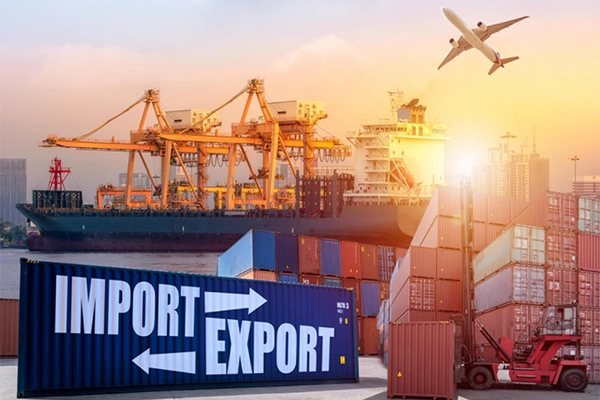
On November 14, the heads of state of China and Peru jointly attended the Chancay Port inauguration ceremony via video link. The official opening of Chancay Port marks another solid step forward in the cooperation between China and Peru under the Belt and Road Initiative, providing new opportunities for maritime freight between South America and Asia. Chancay Port is located approximately 80 kilometers north of Lima, the capital of Peru. Backed by the South American continent and facing the Pacific Ocean, it boasts the advantage of a natural deep-water harbor. This geographical location makes Chancay Port a vital hub connecting South America and Asia. Phase I construction began in 2021, including 4 berths with a maximum water depth of 17.8 meters. In the initial stage, it plans to operate two 14,000TEU container ships weekly. With the expansion of the berths, it will be able to accommodate large vessels with a deadweight capacity of up to 24,000TEU. Phase I can handle 1-1.5 million TEUs and 6 million tons of bulk cargo. Upon completion of Phase II, the throughput will reach 3.5 million TEUs. Currently, no other port on the Pacific coast of South America can accommodate ships of this size, highlighting its significant scale. At the same time, Chancay Port is also the first smart port and green port invested, constructed, and operated by a Chinese enterprise in South America. In addition, the port will also construct a tunnel directly connecting to the Pan-American Highway, linking and radiating to various South American countries! It is estimated that in the future, over 130 million containers will be loaded and unloaded at Chancay Port annually. The Peruvian side calculates that this project can bring $4.5 billion in revenue to the country annually, accounting for 1.8% of GDP. In recent years, bilateral economic and trade cooperation between China and Peru has continued to deepen. Data released by the General Administration of Customs on November 14 shows that from 2016 to 2023, over an 8-year period, the average annual growth rate of China-Peru trade reached 14.6%. In the first 10 months of 2024, bilateral trade continued to grow rapidly, with China's imports from and exports to Peru reaching 254.69 billion yuan, a year-on-year increase of 16.8%. In 2013, China and Peru elevated their relationship to a comprehensive strategic partnership. In 2016, the scale of bilateral trade surpassed 100 billion yuan for the first time. As of 2023, China has been Peru's largest source of imports and largest export market for 10 consecutive years. Peru is an important source of imports for China's copper ore, fishmeal for feed, and other products. In the first 10 months, China's imports of metal ore and agricultural products from Peru reached 148.95 billion yuan and 14.47 billion yuan, respectively, with year-on-year increases of 19.2% and 23.8%, accounting for 85.5% and 8.3% of China's total imports from Peru. Among these, imports of copper ore and fishmeal for feed amounted to 5.892 million tons and 813,000 tons, respectively, accounting for 25.2% and 46.2% of China's total imports of similar products during the same period. With the opening of the Chancay-Shanghai two-way direct shipping route, the one-way sea shipping time between China and Peru will be shortened to 23 days, saving over 20% in logistics costs. Both fruit and mineral trade will benefit from this. Radiating outwards from Peru to its surroundings, goods from countries like Argentina, Brazil, and Bolivia will also be able to be transported from Chancay to China and Asia via the Pan-American Highway, deeply connecting the South American economy with China and consolidating Peru's status as a gateway connecting land and sea, linking Asia and Latin America. With the activation of Chancay Port, a new trade route between China and Peru has been opened, and Peru and surrounding South American countries have entered a new era.

Helping companies expand into the North American market, the dates for the 2025 Las Vegas International Auto Parts (AAPEX SHOW) and Custom Car Show (SEMA SHOW) have been set!


The Automotive Aftermarket Products Expo (AAPEX) in Las Vegas, USA, is a professional auto parts exhibition organized by the Automotive Equipment and Parts Market Association of the United States. As the largest automotive manufacturing trade fair in North America, it receives strong support from the US Department of Commerce. AAPEX SHOW is a gathering place for high-quality buyers and sellers of auto parts and other markets from all over the world, and it is also an essential path for Chinese businesses to enter the North American and even European auto parts markets. In 2024, the AAPEX exhibition covered an area of 40,000 square meters, attracting approximately 2,700 exhibitors and more than 60,000 professional visitors, representing the leading event in the global automotive aftermarket industry, valued at over $2.3 trillion. In 2024, there were more than 1,300 exhibitors from China, with an exhibition area of nearly 13,000 square meters. The number of Chinese exhibitors accounts for approximately 50% of the total number of exhibitors. From 2007 to 2024, Zhenghe International Exhibition Co., Ltd. has served as a primary agent, organizing VIP exhibitors for 18 consecutive years. In 2024, Zhenghe Exhibition organized participating companies to showcase products including gears, bearings, springs, automotive mufflers, automotive exterior parts, brake discs/pads, radiators and their components, automotive electrical appliances, and other related auto parts. Zhenghe Exhibition's professional services and meticulous organization provide participating companies with a high-quality platform to showcase their products and expand international markets. Exhibition Name: 2025 USA Las Vegas International Auto Parts (AAPEX SHOW) and Modified Car Show (SEMA SHOW) Date: November 4-6, 2025 Location: Las Vegas, USA Exhibit Range: 1. Automotive Aftermarket Products Series: Various auto parts, seat belts, brake parts, chassis, clutches, transmissions and gearboxes, lifting equipment, service equipment, debugging equipment, special tools, repair equipment, automotive electrical appliances, audio, electronic equipment, air conditioning, anti-theft products, automotive lighting, automotive beauty supplies, automotive decoration supplies, tires and wheels, transport vehicles, etc. 2. Special exhibition areas include: mechanical repair shops; paint, body and equipment; tools and equipment; medium and heavy trucks; sport utility vehicles, automotive technology, mobile electronics/e-commerce, and international automotive associations. Market Analysis: The North American market is the world's largest auto parts demand market. The market capacity for auto parts products in the United States alone is $60 billion, with more than half relying on imports. Automotive bearings, axles, and hydraulic components are advantageous products in the North American market, with huge development potential. From the perspective of US aftermarket data, the growth of the average vehicle age is robust and irreversible, maintaining sufficient resilience even in years of declining new car sales or economic downturns, demonstrating strong counter-cyclical attributes and sufficient growth space. From the market structure perspective, the US auto parts industry has experienced large-scale mergers and acquisitions, leading to a continuous increase in concentration. The proportion of the top four auto parts companies' stores increased from 7.3% in 1995 to 49.3% in 2023. Although the US market is very large, tariff issues are worth considering for businesses. Businesses can: Diversify market layout: By diversifying market layout, tariff risks can be dispersed, and overall risk resistance can be improved. Strengthen localized production: In response to tariff issues in the US market, companies can consider establishing production bases in the US or neighboring countries to achieve localized production. This not only avoids tariff risks but also reduces logistics costs and improves product competitiveness. Utilize free trade agreements: Trading through countries or regions that have signed FTAs with the US can enjoy lower tariff rates or even zero tariffs. Improve product added value: Improve product added value through technological innovation and brand building to enhance product competitiveness. With the prosperity of the global automotive market, the overseas expansion of the auto parts industry chain has also attracted much attention. From January to September 2024, the cumulative export value of Chinese automotive parts products reached $78.2 billion, a year-on-year increase of 4.6%. The data shows that despite global economic challenges, China's auto parts exports have maintained a stable growth trend.

< 1234...32 > proceed page